
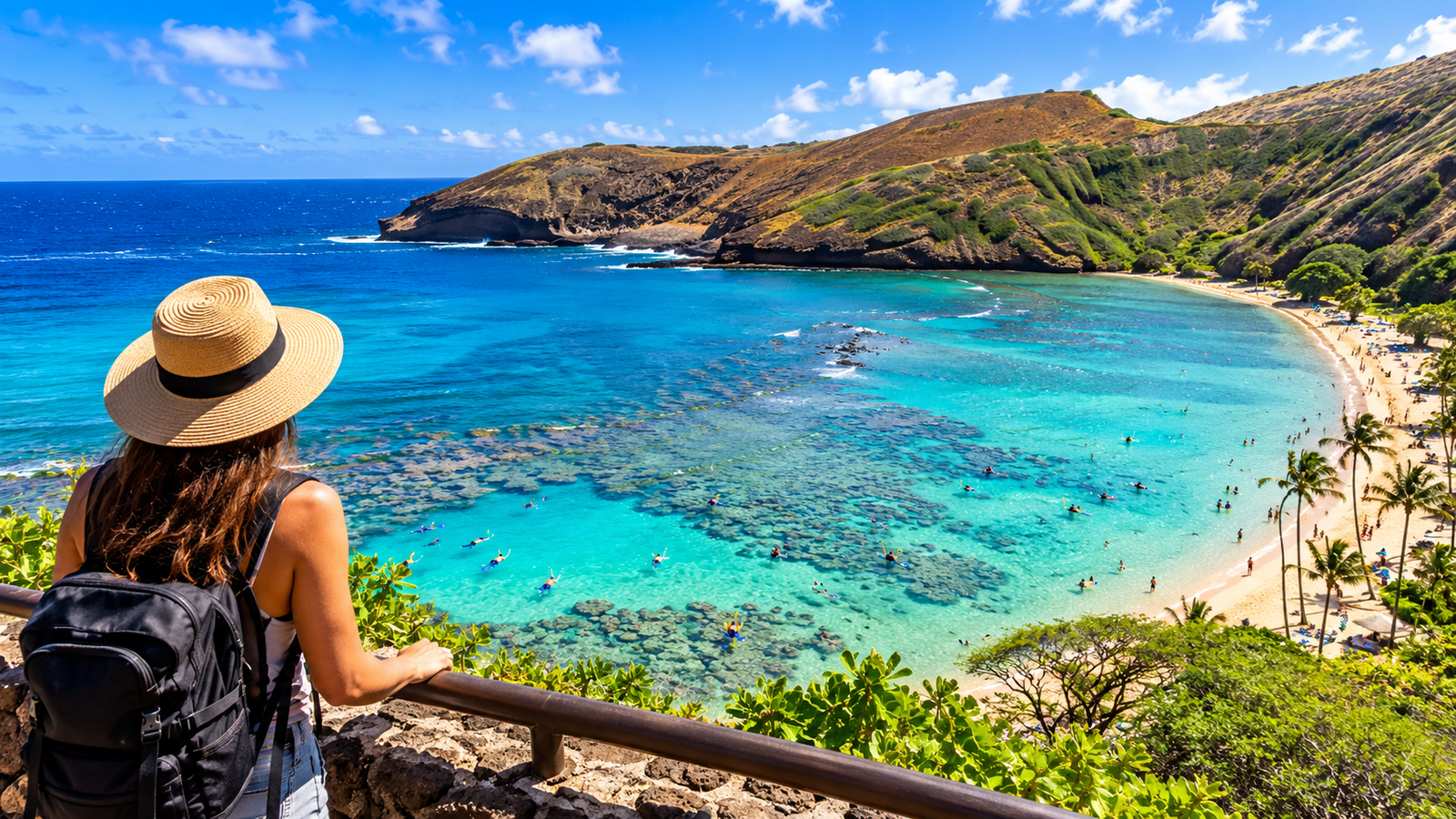
Hanauma Bay is one of Oahu’s most popular snorkeling destinations, known for its turquoise water, volcanic crater scenery, and colorful marine life. If you’re visiting for the first time, a little preparation can make your experience more enjoyable—and help you avoid common mistakes.
Unlike an ordinary beach day, visiting Hanauma Bay Nature Preserve requires planning. You’ll need to understand the reservation process, arrive at the right time, follow the preserve’s conservation rules, and prepare for snorkeling conditions that can change.
These Hanauma Bay tips for first-timers cover nine important things to know before you go, including reservations, admission fees, snorkeling equipment, reef safety, and what to bring.
1. Reserve Your Hanauma Bay Visit in Advance
One of the most important Hanauma Bay tips is to arrange admission before traveling to the preserve.
Hanauma Bay limits visitor access to help protect its marine environment. For non-Hawaii residents, the official city reservation system generally releases admission-only reservations two days before the intended visit at 7 a.m. Hawaii Standard Time.
The city also lists an admission-with-transportation option through Roberts Hawaii, which has a different booking window. Check the official website for the latest details.
Before booking:
- Choose a date when the preserve is scheduled to be open.
- Check the available reservation times.
- Make sure the number of tickets matches your group.
- Read the payment and cancellation conditions.
- Save your confirmation and bring valid identification.
A limited number of walk-in tickets may be available, but they are not guaranteed. If Hanauma Bay is a priority during your Oahu vacation, don’t rely on getting in without a reservation.
Official booking and visitor information: Honolulu’s Hanauma Bay Nature Preserve website.
2. Know the Opening Hours and Admission Fee
Hanauma Bay’s schedule is different from that of many public beaches. According to the City and County of Honolulu, the preserve is generally open Wednesday through Sunday.
The published visitor schedule allows entry from 6:45 a.m. to 1:30 p.m. The beach is cleared at 3:30 p.m., and all visitors must leave the preserve by 4 p.m. Hours may change, so confirm them before your trip.
How much does Hanauma Bay cost?
The official city website lists the following admission information:
- Non-Hawaii residents aged 13 and older: $25 per person.
- Children aged 12 and younger: Free admission.
- Hawaii residents: Free admission with accepted proof of residency, subject to the city’s rules.
- Parking: Fees apply and are paid separately.
Online reservations may include a service fee. Admission prices and policies can change, so check the official website for current rates.
Remember that an admission reservation does not guarantee a parking space. The parking lot has limited capacity, and you may need to wait if it is full.
3. Arrive Early for a More Relaxed Visit
An early start gives you more time to enjoy the preserve without rushing. It also lets you complete the required check-in and educational orientation before heading down to the beach.
Early arrival can be helpful if you want to organize your equipment, find a comfortable place to prepare, and get into the water while conditions are suitable.
However, early arrival does not guarantee perfect visibility or calm water. Ocean conditions vary, and you should always follow lifeguard instructions.
Allow extra time for driving, parking, checking in, and walking between the entrance and beach. If you have a reservation, follow the arrival instructions supplied with your booking.
4. Choose Snorkeling Gear That Fits Properly
You don’t need an expensive snorkeling setup to enjoy Hanauma Bay, but a comfortable mask and properly fitted equipment can make a big difference.
Consider these essentials:
- Snorkel mask: Choose one that fits your face and seals comfortably without being excessively tight.
- Snorkel: Make sure the mouthpiece is comfortable and that you understand how to use it.
- Fins: Use fins that fit securely without squeezing your feet.
- Rash guard: This can help protect your skin from the sun.
- Life jacket or flotation aid: Consider one if you’re not a confident swimmer, and use appropriate equipment as instructed.
Snorkel rentals may be available, but check the current operating arrangements before relying on them. If you bring your own gear, test the fit before entering the water.
Avoid wearing equipment that restricts your movement or makes you uncomfortable. If your mask repeatedly leaks or you struggle to breathe comfortably through your snorkel, return to shore and resolve the problem before trying again.
5. Stay in Shallow Water if You’re a Beginner
Hanauma Bay is a popular choice for first-time snorkelers because some areas have relatively shallow water near the shore. Nevertheless, it is still the ocean, and conditions can change.
If you are new to snorkeling:
- Start in a shallow area where you can stand safely on sand without touching coral.
- Practice breathing through your snorkel before moving farther out.
- Stay within your comfort level and avoid going beyond your swimming ability.
- Never snorkel alone; stay with a capable companion.
- Ask a lifeguard about current conditions and where beginners should enter.
- Leave the water if you become tired, anxious, or uncomfortable.
Do not assume that every part of the bay is equally safe. Currents can be strong near channels and the bay’s entrance, and some areas are recommended only for experienced swimmers or divers.
If the conditions look rough or a lifeguard advises against entering the water, postpone snorkeling. No photograph or marine-life sighting is worth risking your safety.
6. Protect the Coral Reef and Marine Life
Hanauma Bay is a protected Marine Life Conservation District. Its rules exist to safeguard coral, fish, and other marine life, so visitors must be careful both in and out of the water.
Follow these simple rules:
- Never stand on, touch, kick, or break coral.
- Do not feed fish or other wildlife.
- Do not chase, touch, or attempt to handle marine animals.
- Never remove coral, shells, rocks, sand, or other natural material.
- Keep your fins away from the reef as you swim.
- Follow all signs, preserve rules, and staff instructions.
Coral may look like rock, but it is living habitat. Even accidental contact can cause damage. Practice floating horizontally and using slow, controlled fin movements to reduce the chance of hitting the reef.
You may see colorful reef fish or other marine life during your visit, but sightings are never guaranteed. Observe animals quietly and let them move naturally.
7. Bring Sun Protection, Water, and the Essentials
A snorkeling visit can involve several hours outdoors. Packing thoughtfully helps you stay comfortable and avoid unnecessary trips back to your vehicle.
Consider bringing:
- Reef-conscious sun protection that complies with local guidance.
- A rash guard, sun shirt, or other protective clothing.
- Drinking water in a suitable reusable bottle.
- A towel and a change of clothes.
- Water-friendly footwear for walking outside the snorkeling area.
- Your reservation confirmation and valid identification.
- A waterproof phone pouch or dry bag.
- Any personal medication you may need.
Use sun protection before you arrive and reapply it according to the product instructions. Clothing, shade, and a hat can provide additional protection.
Do not leave valuables unattended on the beach. Keep your belongings secure and follow posted rules about what you can bring into the preserve.
8. Watch the Educational Video and Follow Preserve Rules
Visitors are required to watch the Hanauma Bay educational video during each visit, even if they have watched it on an earlier trip.
The orientation explains the preserve’s history, conservation goals, and visitor responsibilities. Treat it as part of the experience rather than an unnecessary delay.
Plan enough time for check-in and orientation before heading down to the beach. The preserve also has specific entry procedures, visitor limits, and rules about marine life and activities.
For the latest information about facilities, access, reservations, and rules, consult the official Hanauma Bay Nature Preserve website.
9. Check Conditions Before You Leave and Have a Backup Plan
Even if you’ve booked your admission, check for changes before setting out. Weather, ocean conditions, maintenance, and operational decisions can affect your visit.
Confirm:
- The preserve is open on your chosen date.
- Your reservation and arrival time are correct.
- Parking and transportation arrangements are practical.
- There are no temporary closures or visitor advisories.
- Ocean conditions are appropriate for your experience level.
If Hanauma Bay is closed or conditions are unsuitable, don’t attempt to bypass restrictions or enter the water elsewhere without checking local safety information.
You could consider another Oahu activity instead. For beach inspiration, read our guide to Lanikai Beach access and current conditions, and always verify the latest access and ocean-safety information before traveling.
What Is the Best Time to Snorkel at Hanauma Bay?
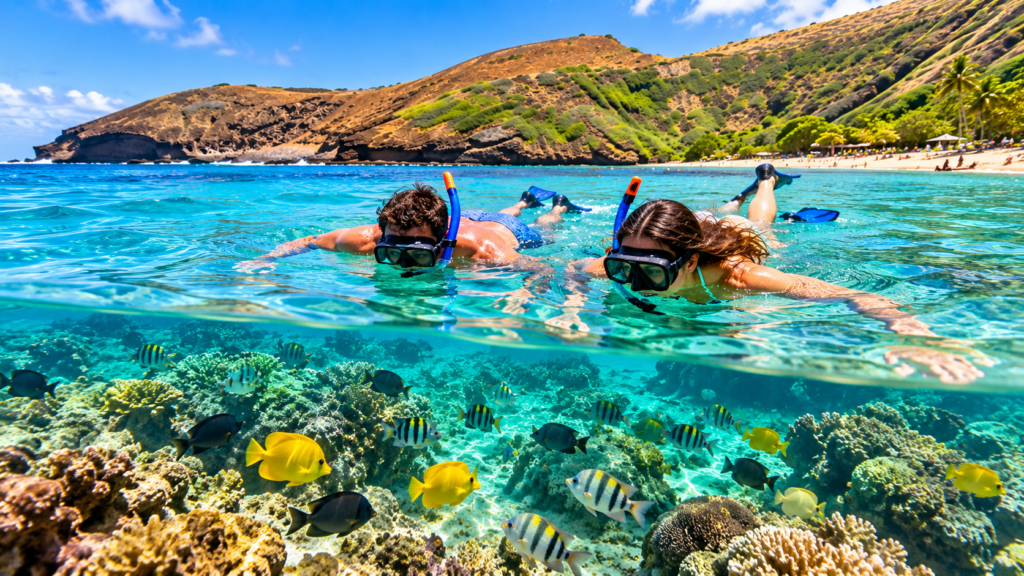
Many visitors prefer the morning because it leaves more time to explore and can offer favorable visibility before the water becomes busier. However, visibility depends on weather, surf, tides, and other conditions.
Rather than relying on the clock alone, check current conditions and ask lifeguards for advice. If you are a beginner, choose a calm, suitable area and remain close to shore.
Hanauma Bay is generally closed on Mondays and Tuesdays, so make sure your itinerary accounts for the regular closure days. Holiday schedules and temporary changes should always be confirmed through the official website.
Is Hanauma Bay Good for First-Time Snorkelers?
It can be an excellent introduction to snorkeling for people who are comfortable in the water and follow the rules. The bay’s scenery, marine environment, and shallower areas make it appealing to many beginners.
But a beautiful setting does not remove the risks of swimming in the ocean. Anyone who is not a confident swimmer should use suitable flotation equipment, remain close to shore, and ask a lifeguard for guidance. Children should be supervised closely by a responsible adult.
If you feel tired, cold, anxious, or out of your depth, return to shore. You can still enjoy the scenery without snorkeling.
Frequently Asked Questions
Do you need a reservation for Hanauma Bay?
Reservations are strongly recommended for non-Hawaii residents. Admission-only reservations generally open two days in advance through the city system. Limited walk-in admission may be available, but it is not guaranteed.
How much does Hanauma Bay cost?
The city currently lists admission for non-Hawaii residents aged 13 and older at $25 per person, with free admission for children aged 12 and younger. Parking and online service fees may be additional. Confirm the latest rates before booking.
What days is Hanauma Bay open?
The preserve is generally open Wednesday through Sunday and closed Monday and Tuesday. Temporary closures and schedule changes can occur, so verify your date on the official website.
What time should I arrive at Hanauma Bay?
Follow the arrival time on your reservation and allow enough time for parking, check-in, and the educational video. An early visit can leave more time for snorkeling, but it does not guarantee better ocean conditions.
Can beginners snorkel at Hanauma Bay?
Beginners may be able to snorkel in suitable shallow areas, but they should stay within their abilities, use appropriate equipment, and follow lifeguard advice. Avoid deeper or current-prone areas if you lack experience.
Can you touch the fish or coral at Hanauma Bay?
No. Do not touch, feed, chase, injure, or remove marine life, and do not touch or stand on coral. These rules help protect the preserve’s fragile ecosystem.
What should I bring to Hanauma Bay?
Bring your reservation confirmation, identification, drinking water, sun protection, a towel, suitable snorkeling gear, and any personal essentials. Check the current rules before packing.
Final Thoughts: Make Your First Hanauma Bay Visit a Good One
Hanauma Bay can be a memorable highlight of an Oahu vacation when you plan ahead and treat the marine environment with care.
Book admission in advance, confirm the latest opening hours, arrive prepared, choose equipment that fits, and stay within your swimming ability. Most importantly, follow the preserve’s rules and lifeguard instructions.
With these nine Hanauma Bay tips for first-timers, you can spend less time worrying about logistics and more time enjoying Oahu’s remarkable coastal scenery.
Before you go: Check the official Hanauma Bay website for current reservations, fees, hours, and visitor updates.
Also Read: Oahu Nightlife: Best Places to Go Out After Dark (2026)
1 thought on “Hanauma Bay Tips for First-Timers: 9 Things to Know Before You Snorkel”