
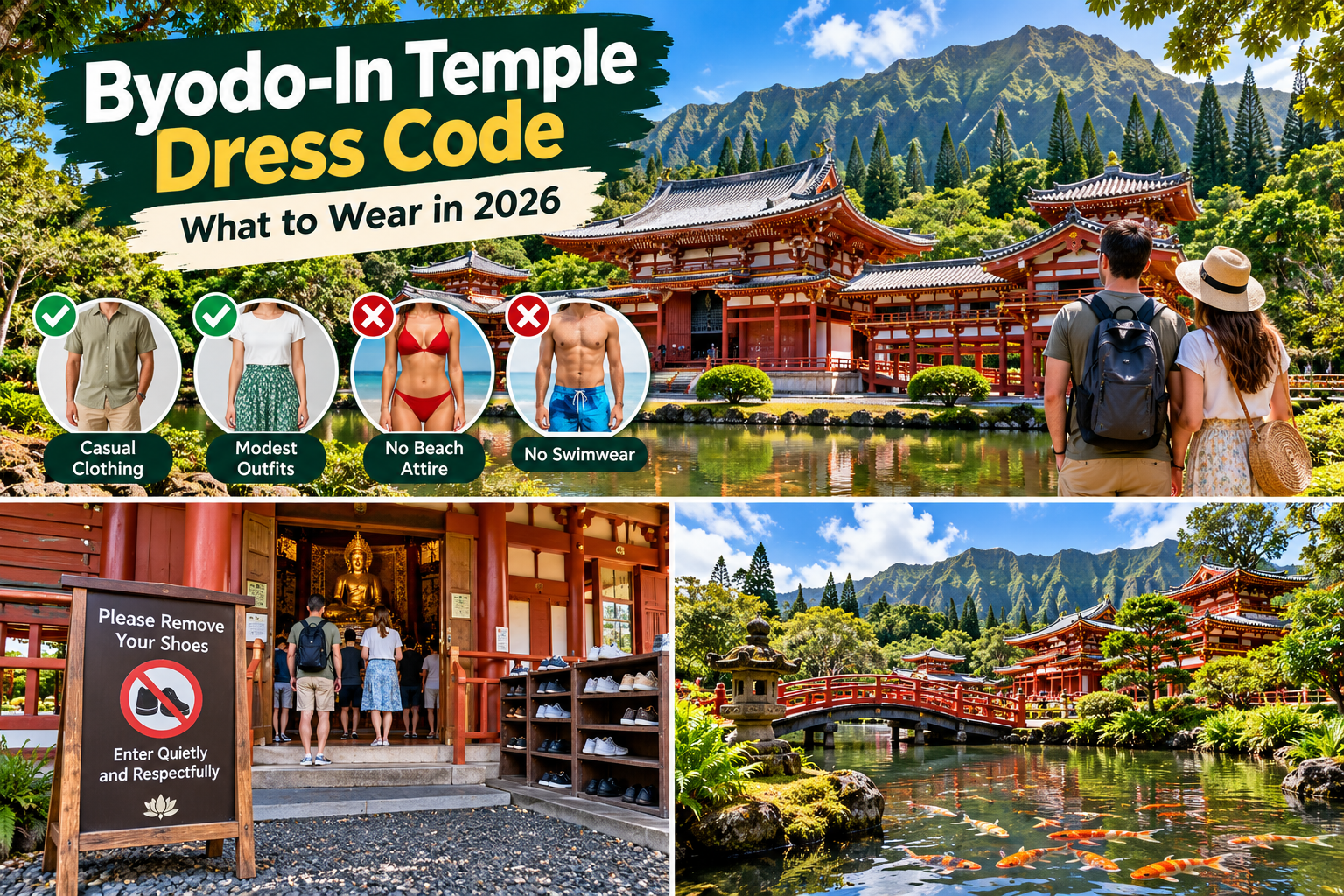
Byodo-In Temple Dress Code: What to Wear in 2026
The Byodo-In Temple dress code is simple: wear comfortable, respectful clothing and avoid beach attire. Located in Kaneohe on Oahu, Hawaii, this peaceful temple welcomes visitors who want to admire its Japanese-inspired architecture, gardens, koi ponds, and beautiful mountain surroundings.
You do not need formal or traditional religious clothing to visit. However, because the temple is a place of prayer and meditation where memorial services may take place, visitors are asked to dress appropriately and behave respectfully.
In this guide, you will learn what to wear at Byodo-In Temple, which outfits to avoid, what to know about footwear, and how to prepare for a comfortable visit.
What Is the Byodo-In Temple Dress Code?
The Byodo-In Temple dress code focuses on respectful clothing rather than formal attire. The official visitor guidance asks guests not to wear beach attire and to behave as they would in a place of worship.
You can generally plan your visit around these simple recommendations:
- Wear clean, comfortable everyday clothing.
- Choose an outfit suitable for a peaceful religious and memorial setting.
- Avoid swimsuits and beachwear.
- Carry a light cover-up if you are visiting after spending time at the beach.
- Follow posted signs and instructions from temple staff.
There is no need to purchase a special outfit for your visit. A comfortable T-shirt, a casual shirt, trousers, or a modest dress can work well.
What Should You Wear to Byodo-In Temple?
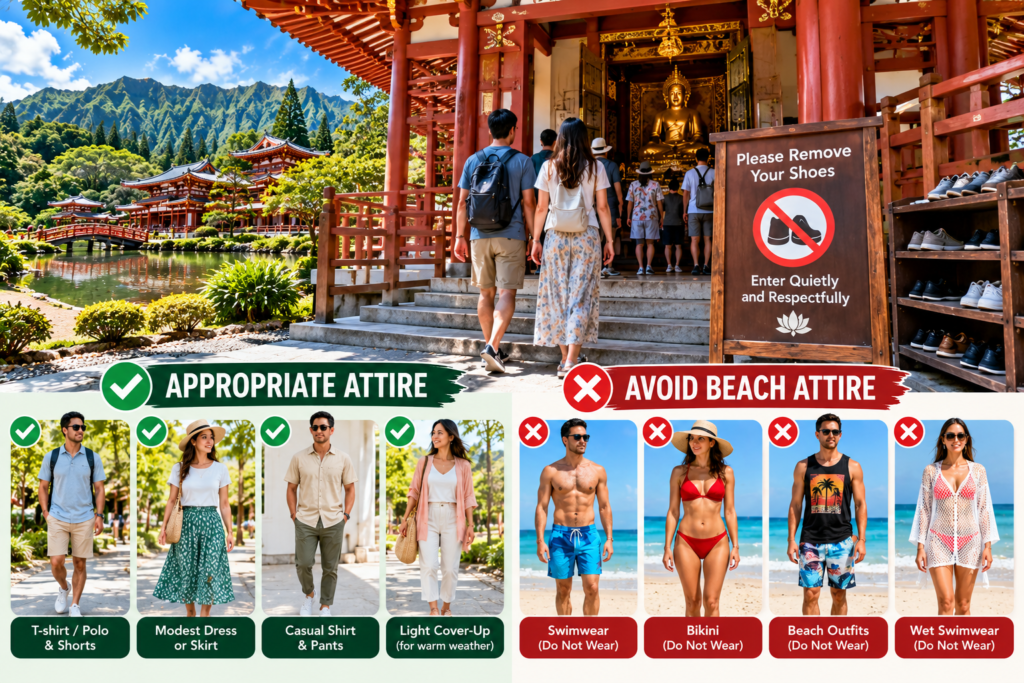
The best outfit combines comfort, modesty, and practicality. Oahu’s weather can be warm and humid, so lightweight, breathable fabrics are useful when exploring the grounds.
What Men Should Wear
Men can choose simple casual clothing that is appropriate for a place of worship.
Good options include:
- A short-sleeved T-shirt without offensive graphics.
- A polo shirt or casual button-down shirt.
- Lightweight trousers or comfortable shorts.
- Comfortable walking shoes or sandals.
- A light jacket for changing weather.
Knee-length shorts are a practical option for warm days. Although formal clothing is unnecessary, avoid arriving in swimwear or an outfit that looks like beach attire.
What Women Should Wear
Women can wear comfortable everyday clothing that feels appropriate for a quiet spiritual setting.
Suitable options include:
- A casual dress.
- A lightweight blouse with trousers.
- A long skirt with a comfortable top.
- Capri pants or lightweight trousers.
- A breathable outfit with a light scarf or cover-up.
You do not have to wear a long dress or cover every part of your body to a particular measurement. The main consideration is to avoid beachwear and choose respectful clothing.
If you plan to visit after swimming, bring a change of clothes rather than relying on a swimsuit cover-up.
What Children Should Wear
Children can wear comfortable everyday outfits suitable for walking around the grounds.
Consider packing:
- A T-shirt and shorts.
- A lightweight dress.
- Comfortable shoes or sandals.
- An extra shirt in case of spills or wet weather.
Help children understand that the temple is a peaceful place. They should use quiet voices, avoid running, and follow the visitor rules.
What Should You Avoid Wearing?
Understanding what not to wear is an important part of preparing for your visit.
The temple specifically asks visitors to avoid beach attire. For that reason, do not plan to enter wearing only a swimsuit or bikini.
It is also sensible to avoid:
- Wet swimwear.
- Beach outfits that are unsuitable for a place of worship.
- Clothing with offensive words or graphics.
- Outfits that make walking around the grounds uncomfortable.
You do not need expensive clothes, formal shoes, or traditional Japanese clothing. Simple, clean, comfortable attire is sufficient.
If you are unsure whether an outfit is appropriate, choose an alternative that you would feel comfortable wearing to a quiet religious or memorial site.
Can You Wear Shorts to Byodo-In Temple?
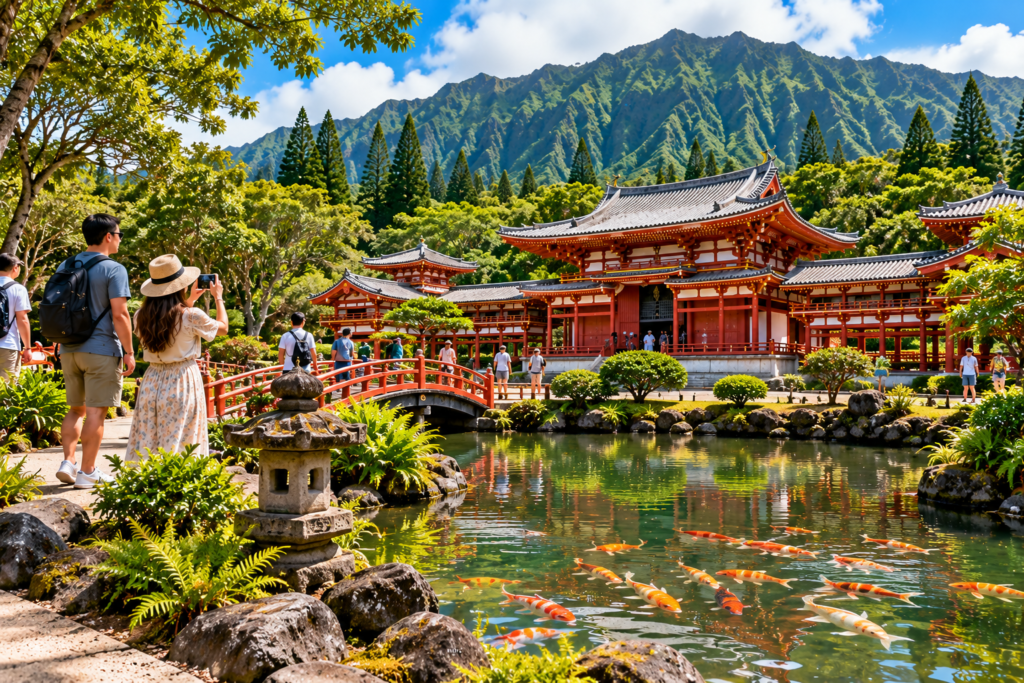
Yes, comfortable casual shorts can be a practical choice for visiting Oahu in warm weather. The official guidance emphasizes avoiding beach attire rather than requiring formal clothing.
Choose ordinary walking shorts instead of swim shorts or beachwear. Pair them with a regular T-shirt or polo shirt and comfortable footwear.
If you are visiting several attractions on the same day, you can plan a casual outfit that works for sightseeing while remaining appropriate for the temple.
Can You Wear Sandals or Flip-Flops?
Comfortable sandals can be useful because you will be walking around the temple grounds. However, choose footwear that is easy to remove if you plan to enter the main temple hall.
Visitors are asked to remove their shoes before entering the hall. Follow the signs and instructions at the entrance.
Practical footwear choices include:
- Slip-on sandals.
- Comfortable walking shoes.
- Lightweight sneakers.
- Easy-to-remove casual footwear.
The paths and outdoor areas may be uneven or wet, so choose shoes that provide enough grip for comfortable walking.
Do You Need to Cover Your Shoulders and Knees?
The official visitor guidance does not specify a universal measurement for shoulder or knee coverage. Its main instruction is to dress appropriately and avoid beach attire.
If you want a simple approach, choose a regular shirt and comfortable trousers or shorts. A dress or skirt is also suitable if you feel comfortable wearing it.
A light scarf or cover-up is useful if you prefer additional coverage or want an easy option when moving between different attractions.
The goal is to respect the setting without making your packing unnecessarily complicated.
What to Pack for a Comfortable Visit
Along with appropriate clothing, a few practical items can make your visit easier.
Lightweight clothing: Breathable fabrics are useful in Oahu’s warm, humid weather.
Comfortable footwear: Choose shoes suitable for walking around outdoor paths and easy to remove when entering the hall.
A light cover-up: Useful if the weather changes or you want an extra layer.
Sun protection: Bring sunscreen, sunglasses, and a hat for outdoor sightseeing.
Water: Carry drinking water, particularly if you are visiting several Oahu attractions in one day.
A camera or phone: The temple grounds offer beautiful scenery, but always respect posted photography restrictions and other visitors.
Byodo-In Temple Etiquette: How to Behave During Your Visit
Appropriate clothing is only one part of visiting respectfully. The temple’s official guidance also asks visitors to behave as they would in a place of worship.
Keep these points in mind:
- Speak quietly and avoid shouting.
- Do not run around the grounds.
- Do not climb trees or structures.
- Do not throw rocks or disturb wildlife.
- Follow instructions from temple staff.
- Remove your shoes before entering the main temple hall.
- Treat memorial areas and other visitors with respect.
You can enjoy the temple’s peaceful atmosphere while taking time to appreciate its architecture and natural surroundings.
Can You Take Photos at Byodo-In Temple?
Many visitors photograph the temple, koi ponds, gardens, and mountain scenery. These are popular parts of the experience.
For ordinary sightseeing, be considerate of other visitors and avoid interrupting prayer or memorial activities. If you are planning a professional, commercial, or organized photoshoot, contact the temple in advance to confirm whether a permit is required.
Simple, comfortable clothing in neutral or natural colors can work well in photographs without distracting from the surroundings.
Where Is Byodo-In Temple Located?
Byodo-In Temple is located at:
47-200 Kahekili Highway, Kaneohe, Hawaii 96744
It is situated within the Valley of the Temples Memorial Park on Oahu, with the Ko’olau Mountains providing a scenic backdrop.
Many visitors include the temple in a day of exploring Oahu’s windward coast. Check your route and allow sufficient time to enjoy the grounds rather than treating the visit as a quick photo stop.
How Long Should You Spend at Byodo-In Temple?
The official visitor guidance recommends allowing at least 30 minutes to one hour to enjoy the experience.
That gives you time to explore the grounds, admire the architecture, observe the koi ponds, and visit the main hall. You may want additional time if you enjoy photography or plan to explore other nearby attractions.
Arrive with enough time to enjoy the visit without rushing, and check the official website for current hours and admission information before departure.
Byodo-In Temple Dress Code: Quick Checklist
Before leaving for the temple, use this checklist:
- Wear comfortable, respectful clothing.
- Change out of beachwear and wet swimwear.
- Pack a light cover-up if needed.
- Choose comfortable walking footwear.
- Be prepared to remove shoes before entering the main hall.
- Bring sun protection and drinking water.
- Check current opening hours and admission details.
- Follow posted visitor rules and staff instructions.
With these basics covered, you can enjoy the temple without worrying about what to wear.
Frequently Asked Questions
Is there an official Byodo-In Temple dress code?
The official guidance asks visitors to dress appropriately and avoid beach attire because the temple is a place of prayer and meditation. Formal clothing is not necessary.
Can I wear a swimsuit to Byodo-In Temple?
You should not visit in beach attire or a swimsuit alone. Bring a change of clothes if you are visiting after swimming.
Can I wear shorts to Byodo-In Temple?
Comfortable everyday shorts can be suitable. Avoid swim shorts and beachwear, and choose an outfit appropriate for a place of worship.
Do I have to remove my shoes at Byodo-In Temple?
Visitors should remove their shoes before entering the main temple hall. Follow the instructions posted at the entrance.
Can I wear sandals to Byodo-In Temple?
Comfortable sandals are practical for walking around the grounds. Easy-to-remove footwear is especially useful when entering the main hall.
Do I need to wear traditional Japanese clothing?
No. Traditional clothing is not required. Comfortable, respectful everyday clothing is sufficient.
What is the best outfit for visiting Byodo-In Temple?
A regular T-shirt or casual shirt paired with comfortable trousers or shorts is a practical choice. A lightweight dress is another option. Avoid beach attire and choose clothing suitable for a peaceful place of worship.
Final Thoughts
The Byodo-In Temple dress code is easy to follow when you remember one main rule: dress respectfully and avoid beach attire. You do not need formal clothing or a special outfit to enjoy this beautiful Oahu attraction.
Wear something comfortable, bring a light cover-up if needed, and be prepared to remove your shoes before entering the main temple hall. Most importantly, respect the peaceful setting and follow the temple’s visitor guidance.
With a little preparation, you can enjoy the temple’s architecture, gardens, and mountain scenery while making your visit comfortable and respectful.

One Comment