Punchbowl Cemetery Oahu | History, Location & Visitor Guide

Oahu Punchbowl Cemetery is one of the most meaningful places in Hawaii. Many travelers visit Oahu for the beaches, surfing, and sunsets. But, many leave with lasting memories after visiting this historic site. The National Memorial Cemetery of the Pacific sits in Punchbowl Crater, Honolulu.
People look for it by various names, like Punchbowl Cemetery Oahu, Punchbowl Memorial Cemetery Oahu, Hawaii, Oahu Cemetery Punchbowl, and Oahu Punchbowl National Cemetery. When people type into Google, they look for a special place to remember.
This guide covers everything in clear, full paragraphs. You will explore its history, location, funeral services, and visiting details. You’ll also see why it remains important to the nation. The goal here is simple. Give real, verified information in a friendly tone that feels human, not robotic.
What Is Oahu Punchbowl Cemetery
Oahu Punchbowl Cemetery is the National Memorial Cemetery of the Pacific. It’s a national cemetery in the U.S. The National Cemetery Administration manages it. This group is part of the Department of Veterans Affairs. The cemetery honors U.S. military members. It especially remembers those who served in the Pacific during World War II, the Korean War, and the Vietnam War.
This is a top military cemetery outside the U.S. More than sixty thousand veterans and their eligible family members rest here. The cemetery has memorial courts, too. They list more than 28,000 service members who are missing in action or lost at sea.
Artists carved these names into marble walls called the Courts of the Missing. The American Battle Monuments Commission takes care of them. When someone identifies the remains later, they place a bronze rosette next to the name. That small symbol carries deep emotional weight for families.
Location of Punchbowl Cemetery Oahu
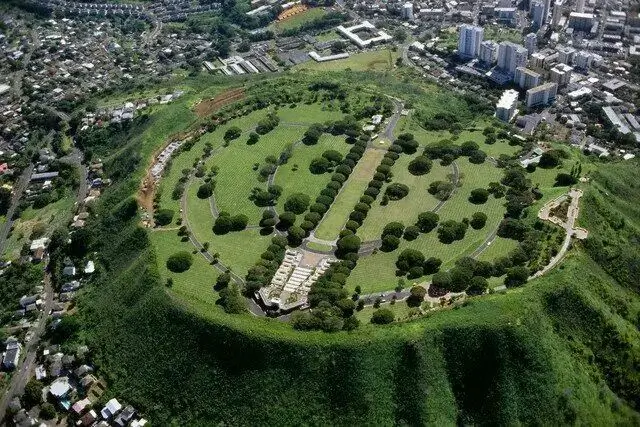
Punchbowl Cemetery sits in Punchbowl Crater, just north of downtown Honolulu. The crater formed roughly seventy five thousand to one hundred thousand years ago due to volcanic activity. Ancient Hawaiians called it Puowaina, which translates to Hill of Sacrifice. Today, the peaceful landscape contrasts with the busy city below.
If someone searches oahu punchbowl national cemetery google map, they will find the address listed as 2177 Puowaina Drive, Honolulu, Hawaii 96813. The cemetery sits about fifteen to twenty minutes from Waikiki by car, depending on traffic. Clear road signs guide visitors up the hill to the entrance. Parking is available within the grounds.
The elevated position offers wide views of Honolulu, Diamond Head, and the Pacific Ocean. Many visitors describe the setting as calm and reflective. The quiet atmosphere feels separate from the city, even though it sits right above it.
Why It Is Called Punchbowl
The name Punchbowl comes from the shape of the crater. Early Americans believed it looked like a large bowl used for serving punch at gatherings. The nickname became common over time, and today most people use the term punchbowl cemetery oahu when searching online. The official name remains National Memorial Cemetery of the Pacific, but Punchbowl continues to feel familiar and local.
History of Punchbowl Memorial Cemetery Oahu Hawaii
After World War II, the United States needed a permanent burial site in the Pacific region for service members who died during the war. Congress approved the establishment of a national cemetery in Punchbowl Crater in 1948. The first burial took place in 1949. Over the following decades, the cemetery expanded to include veterans from the Korean War, Vietnam War, and later conflicts.
According to the United States Department of Veterans Affairs, many remains buried here were repatriated from temporary wartime cemeteries across the Pacific. The location was chosen because Hawaii played a central role in Pacific military operations during World War II. The cemetery became both a resting place and a symbol of remembrance.
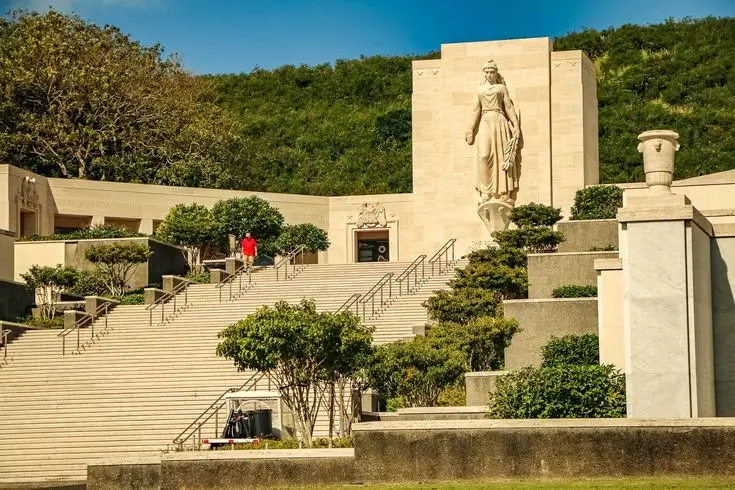
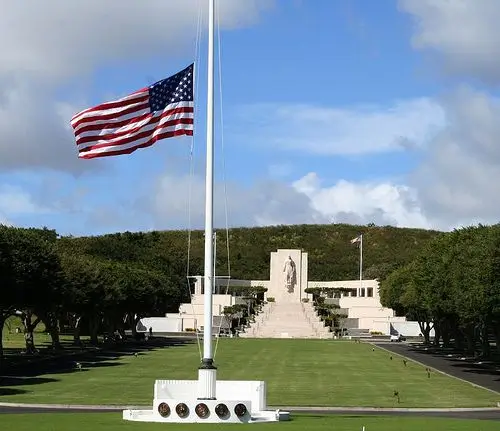
The American Battle Monuments Commission later constructed the Honolulu Memorial within the cemetery. This structure includes marble maps that illustrate military campaigns across the Pacific. The memorial provides historical context and honors those whose remains were never recovered.
The Courts of the Missing
One of the most powerful features of oahu punchbowl memorial cemetery is the Courts of the Missing. These marble courts list the names of thousands of service members who were missing in action. The names represent individuals from World War II, the Korean War, and the Vietnam War. Families who never received remains can visit this site to honor their loved ones.
The American Battle Monuments Commission maintains these walls. If remains are identified in the future, officials place a bronze rosette beside the name. This update confirms that the service member has been accounted for. It offers families a sense of closure, even many years later.
Architecture and Design
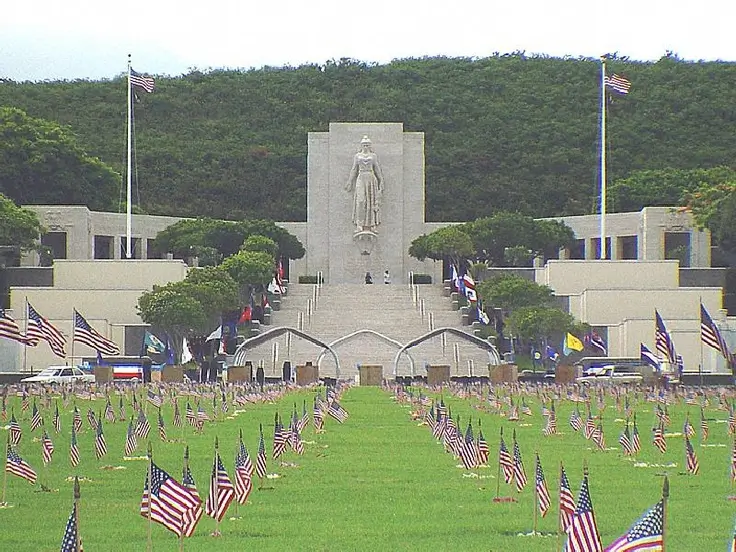
The cemetery design reflects traditional national cemetery layout principles. White marble headstones stand in precise rows across green lawns. The alignment creates a sense of order and equality. Every marker looks similar, reinforcing the idea that rank and status do not matter in remembrance. Service matters.
Palm trees and tropical plants blend with the natural Hawaiian setting. The Honolulu Memorial sits at the highest point within the crater. Visitors walk up a grand staircase to reach it. From there, they can see the entire cemetery below. The design encourages quiet reflection rather than distraction.
Oahu Punchbowl National Cemetery Burial Eligibility
Burial at oahu punchbowl national cemetery follows federal guidelines established by the Department of Veterans Affairs. Generally, eligible individuals include United States military veterans who were discharged under conditions other than dishonorable. Active duty service members who die while serving also qualify. Certain spouses and dependent children may receive burial benefits as well.
Burial benefits typically include a gravesite, opening and closing of the grave, perpetual care, a government headstone or marker, and a Presidential Memorial Certificate. Families do not purchase plots in advance like private cemeteries. Eligibility is confirmed at the time of need through official VA channels.
Oahu Punchbowl Memorial Cemetery Funeral Service Listing
Families often search for oahu punchbowl memorial cemetery funeral service listing when planning arrangements. Funeral services at the cemetery are coordinated through the National Cemetery Scheduling Office in partnership with licensed funeral homes. Military honors are provided for eligible veterans. These honors usually include a ceremonial flag presentation and the playing of Taps.
For updated funeral service schedules, families should rely on official communication from the Department of Veterans Affairs or the cemetery administration. Public listings may vary depending on family privacy requests. Official sources provide the most accurate information.
Visiting Hawaii Oahu Cemetery Punchbowl
Punchbowl Cemetery remains open to the public daily, except for certain federal holidays. Visitors can walk the grounds, visit gravesites, and view memorial structures. There is no admission fee.
Respect is essential. This is an active cemetery where families gather to remember loved ones. Visitors should dress appropriately, keep noise low, and follow posted rules. Activities such as biking, picnicking, drone flying, or bringing pets are not allowed, except for service animals.
Photography for personal use is generally permitted. Commercial filming requires prior approval.
Best Time to Visit Punchbowl Cemetery Oahu
Morning hours often provide cooler temperatures and fewer visitors. The soft morning light also enhances photography. Memorial Day and Veterans Day ceremonies draw larger crowds, as official events take place on those dates. If someone prefers a quieter visit, a regular weekday offers a more peaceful experience.
Difference Between Punchbowl Cemetery and Pearl Harbor
Many travelers confuse Punchbowl Cemetery with Pearl Harbor. They are separate sites. Pearl Harbor is home to the USS Arizona Memorial and other historic naval landmarks. Punchbowl Cemetery honors veterans from multiple wars and branches of service. While both locations carry deep historical significance, they serve different purposes.
Many visitors include both in their Honolulu itinerary, as they complement each other in understanding American military history in the Pacific.
Cultural Meaning of Puowaina
Before becoming a national cemetery, Punchbowl Crater held cultural meaning in Hawaiian history. The name Puowaina translates to Hill of Sacrifice. Historical records suggest the site may have been used for ceremonial purposes. Documentation varies, and historians continue to study its early significance.
The transformation from volcanic crater to military memorial reflects layers of Hawaiian and American history combined in one place.
Emotional Impact of Visiting Oahu Punchbowl Cemetery
Many people expect a short stop for sightseeing. Instead, they often stay longer. The rows of white headstones stretch across the landscape in quiet symmetry. Each marker represents a life, a family, and a story.
The silence feels heavy but peaceful. Visitors often speak softly without realizing it. The environment naturally encourages respect.
Standing at the Honolulu Memorial and looking across the city skyline creates a powerful contrast between everyday life and sacrifice.
Researching a Burial at Punchbowl Memorial Cemetery Oahu Hawaii
Those searching for a specific burial can use the official Nationwide Gravesite Locator provided by the Department of Veterans Affairs. This database allows users to search by name, branch of service, and dates. Using official systems ensures accurate information and builds trust with families seeking records.
Avoid relying on unofficial databases. Federal records remain the most reliable source.
Why Oahu Punchbowl Cemetery Matters Today
Oahu Punchbowl Cemetery continues to serve as a living memorial. It honors past service members while welcoming new generations of veterans. It preserves military history in a physical, accessible space. Families visit daily. Ceremonies take place annually. Records remain publicly searchable.
In a world where information moves fast, places like punchbowl cemetery oahu remind people to slow down. To reflect. To remember.
The combination of natural beauty, historical depth, and national responsibility makes punchbowl memorial cemetery oahu hawaii one of the most meaningful sites in the Pacific region.
It is not just a cemetery. It is a place of memory, accountability, and gratitude.
Anyone visiting Honolulu should consider taking time to visit Hawaii Oahu cemetery punchbowl. Walk quietly. Read the names. Look at the horizon. You will leave with more than photos. You will leave with perspective.
Conclusion
Oahu Punchbowl Cemetery is more than a historic site in Honolulu. It is a national place of honor. Known as the National Memorial Cemetery of the Pacific, this sacred ground recognizes thousands of American service members who served in major conflicts across generations. Whether people search for punchbowl cemetery oahu, punchbowl memorial cemetery oahu hawaii, or oahu punchbowl national cemetery, they are looking for a place built on respect and remembrance.
Set inside Punchbowl Crater, the cemetery combines natural beauty with deep history. The rows of white headstones, the Courts of the Missing, and the peaceful views over Honolulu create a powerful experience for visitors.
In simple terms, Hawaii Oahu cemetery Punchbowl is not just a landmark. It is a living memorial that continues to honor service, preserve history, and offer families a place to remember.
FAQs About Oahu Punchbowl Cemetery
Oahu Punchbowl Cemetery is the common name for the National Memorial Cemetery of the Pacific in Honolulu, Hawaii. It honors U.S. service members who served in World War I, World War II, the Korean War, Vietnam War, and later conflicts.
Punchbowl Cemetery Oahu is located inside Punchbowl Crater in Honolulu, Hawaii. It sits about 10 minutes from Waikiki and offers panoramic views of the city and Diamond Head.
Eligible veterans of the U.S. Armed Forces, certain service members, and qualified family members can be buried at Oahu Punchbowl National Cemetery. Eligibility follows rules set by the U.S. Department of Veterans Affairs.
You can locate graves using the official National Cemetery Administration grave locator online. Many visitors also search for Oahu Punchbowl National Cemetery Google Map to get directions easily.
Punchbowl Cemetery is usually open daily from morning until late afternoon. Hours may vary on federal holidays, so visitors should check the official National Cemetery Administration website before visiting.
Yes. Oahu Punchbowl Memorial Cemetery funeral service listings and burial arrangements are managed through the Department of Veterans Affairs. Families must schedule services in advance through official VA channels.