Hawaiian Islands Hurricane Season 2026: When It Starts, Peak Months, and Is It Safe to Visit

If you are planning a trip to Oahu, Maui, Kauai, or the Big Island sometime between June and November, you have probably typed some version of “Hawaiian Islands Hurricane Season” into Google and landed here. You are not being paranoid. You are being smart. Hawaii sits in one of the most closely watched hurricane zones in the country, and knowing what the season actually looks like, month by month, can be the difference between a stress free vacation and a scrambled one.
This guide answers the question completely. Not just “when is it,” but what actually happens during it, how often storms hit each island, what 2026 looks like specifically, and what you should do if a storm forms while you are already on the ground in Waikiki or Lahaina. We pulled directly from NOAA and the Central Pacific Hurricane Center (CPHC), the two agencies that actually track and name these storms, so the numbers here are the same ones meteorologists use.
When Is Hurricane Season in the Hawaiian Islands?
The official hawaiian islands hurricane season runs from June 1 through November 30 every year. This is the same window used across the entire Central Pacific basin, which is the stretch of ocean between 140°W longitude and the International Date Line, the exact zone Hawaii sits inside.
That six month window is set by NOAA and the CPHC based on decades of sea surface temperature and atmospheric data. Warm ocean water is fuel for tropical cyclones, and the Central Pacific stays warm enough to support storm formation almost exclusively during these months. Outside that window, from December through May, tropical cyclone activity near Hawaii is rare but not impossible. NOAA is clear that storms can technically form outside the official dates, so “season over” does not mean “risk zero,” it means the odds drop dramatically.
If you searched when is hurricane season in Hawaii, hurricane season for Hawaii, or when does hurricane season start in Hawaii, this is your direct answer: it starts June 1 and ends November 30, with the calendar being identical whether you are asking about Oahu, Maui, Kauai, or the Big Island.
What Months Are Hurricanes Most Common in Hawaii?
Not every month inside that six month window carries equal risk. If you break the season down by activity level, a clear pattern emerges. July, August, and September consistently produce the most tropical cyclone activity in the Central Pacific, and this holds true historically going back decades. Ocean temperatures peak in late summer, and that warmth is exactly what tropical systems need to strengthen.
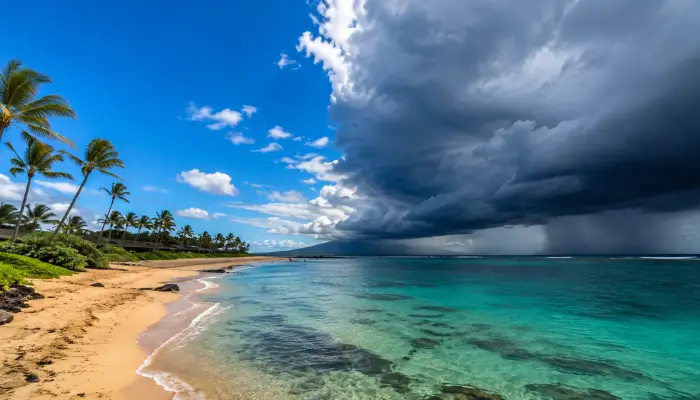
August and September in particular are the months meteorologists flag as the highest risk stretch, and they are also the months when most of the storms that have actually threatened the islands, including Iniki, Iselle, and Lane, made their closest approach.
June and July open the season with rising ocean heat but relatively fewer storms. October sees activity begin to taper as wind shear patterns shift. November closes out the season with the lowest storm formation numbers of the entire period.
Hawaii Hurricane Season Month by Month
Here is a practical breakdown of what to actually expect during each month of the hawaiian islands hurricane season, useful whether you are booking a trip or just trying to understand your risk window.
June
The season opens June 1. Ocean temperatures are still climbing toward their peak, so storm formation is possible but historically uncommon this early. Most years, June passes without any named storm affecting Hawaii directly. This is generally considered a lower risk month for travelers asking is October hurricane season in Hawaii style questions about safer timing, and June often gets grouped in that same “lower activity” bucket.
July
Activity begins to increase. Storms forming off the coast of Mexico in the Eastern Pacific sometimes track westward toward Hawaii’s longitude during this month, occasionally weakening into remnant moisture by the time they arrive, but sometimes maintaining strength. Hawaii hurricane season July searches often reflect early trip planning, and July is a reasonable time to visit with normal seasonal awareness.
August
This is widely considered the peak of Hawaii hurricane season August activity. Sea surface temperatures around the islands reach their warmest point of the year, which is the single biggest driver of tropical cyclone strength. Several of the storms that have come closest to directly striking Hawaii, including Hurricane Lane in 2018, developed or intensified during August.
September
September runs a close second to August and, in some historical datasets, actually edges it out as the single month most likely to produce a storm that directly affects the islands. Ocean heat is still elevated, and this is typically the month locals and emergency management officials watch most closely.
October
Storm formation begins tapering here. Wind shear patterns associated with the approaching winter season start to disrupt tropical cyclone development, and storms that do form are more likely to be steered away from the islands by shifting jet stream patterns. This is why is October hurricane season in Hawaii is such a common search. Technically yes, October is still inside the official window, but the practical risk is meaningfully lower than August or September.
November
The final month of the official season. Storm activity is historically low, and direct impacts to Hawaii in November are rare. The season officially closes on November 30.
Does Hawaii Get Hurricanes?
Yes, but this deserves real context because the honest answer is more nuanced than a simple yes or no. Hawaii sits within an active hurricane basin, and the islands are absolutely capable of experiencing tropical storms, tropical depressions, and full hurricanes. The Central Pacific Hurricane Center actively tracks and names systems in this basin every single year.
What makes Hawaii different from the answer is Oahu geography. The islands are a relatively small target sitting in a very large ocean. Most storms that form in or move into the Central Pacific pass north or south of the island chain without making landfall. Direct hits are genuinely uncommon, but “uncommon” is not “impossible,” and the islands have taken serious direct and near direct hits before, which we cover in the next section.
If your search was does Hawaii get hurricanes in August or does Hawaii get hurricanes in September, the answer is specifically yes, those are the two months where formation and close approach are most likely.
How Often Do Hurricanes Hit the Hawaiian Islands?
This is the question most travel sites answer vaguely, so let’s be specific.
Direct hurricane landfalls on the main Hawaiian Islands are rare, historically averaging roughly once every few years for any storm that produces significant island wide impact, and true direct hits with sustained hurricane force winds at landfall are rarer still. But “rare” needs real examples to mean anything, so here is the actual track record:
- Hurricane Iniki (1992) remains the benchmark disaster. It made a direct hit on Kauai as a Category 4 storm, causing catastrophic damage and six deaths. It is still the most powerful hurricane to strike Hawaii in recorded history.
- Hurricane Iselle (2014) made landfall on the Big Island as a tropical storm, causing significant flooding and wind damage, particularly in the Puna district.
- Hurricane Lane (2018) did not make a direct landfall but passed close enough to dump record breaking rainfall on the Big Island, with some areas recording over 50 inches of rain, one of the wettest tropical cyclone events ever recorded in the United States.
- Hurricane Douglas (2020) passed extremely close to Oahu and Maui as a hurricane, prompting warnings across the islands, though it stayed just far enough offshore to avoid a direct landfall.
- Hurricane Fausto (2026) tracked just north of the islands in late July, triggering trade wind disruption and hot, humid conditions but no direct landfall, a pattern consistent with most Central Pacific systems.
So the honest picture: full direct hurricane landfalls are genuinely rare, roughly a handful of significant events per decade across the entire island chain, but close passes that bring heavy rain, dangerous surf, and flooding are considerably more common than an outright landfall. This is the nuance that most competing articles skip entirely, and it matters for how you should actually think about risk.
Which Hawaiian Islands Are Most Affected by Hurricanes?
Risk is not evenly distributed across the chain. Here is how it breaks down island by island.
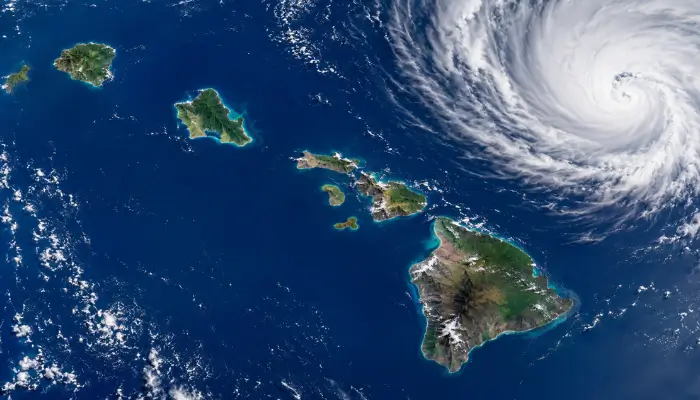
Kauai Hurricane Season
Kauai carries the heaviest historical scar tissue here because of Hurricane Iniki. Its position as the northwesternmost main island also puts it slightly more exposed to storms tracking in from the southeast that have not yet weakened. Kauai hurricane risk is generally viewed as comparable to the rest of the chain in terms of frequency, but Iniki’s severity keeps it top of mind for both residents and travelers researching hurricanes in Kauai.
Oahu Hurricane Season
Oahu hurricane season activity has historically meant close calls more than direct hits. Hurricane Douglas came within roughly 30 miles of Honolulu in 2020 without making landfall. Because Oahu is the most populated island and home to Waikiki and Honolulu, even a near miss generates significant news coverage, which is part of why Honolulu hurricane season and Waikiki hurricane season are heavily searched terms even in years without a direct impact.
Maui Hurricane Season
Maui hurricane season risk is similar in frequency to the other islands, though Maui has also dealt with hurricane force wind events that were not direct landfalls, most notably in 2023 when hurricane force winds from a passing distant system (combined with other atmospheric factors) contributed to devastating wildfire conditions in Lahaina. That event is a useful reminder that hurricane season impacts on Hawaii are not limited to the storm’s direct path; distant systems can still create dangerous wind conditions across the islands.
Big Island Hurricane Season
The Big Island hurricane season track record includes two of the more significant events in recent memory: Iselle’s 2014 landfall near Puna and Lane’s record rainfall in 2018. The Big Island’s size and varied terrain also make it more prone to serious flooding when a tropical system stalls or slows nearby, since mountainous terrain can wring enormous amounts of rain out of a passing storm.
Is Hawaii Safe During Hurricane Season?
Yes, for the overwhelming majority of any given hurricane season, Hawaii is safe to visit. This is genuinely the most important message for travelers to take away, because search intent here is really about reassurance, not just meteorology.
Here is the practical reality. On any given day between June and November, there is almost certainly no active storm anywhere near the islands. The islands maintain daily life, tourism operations, flights, and hotels around Waikiki bookings normally throughout the entire season. The Central Pacific Hurricane Center and National Weather Service actively monitor the basin and typically provide several days of advance warning before any storm could plausibly affect the islands. There is no scenario where a hurricane appears with zero notice.
That said, “safe” does not mean “risk free,” and travelers deserve the full picture rather than blanket reassurance. If you are booking during Hawaii hurricane season August or Hawaii hurricane season September, you are booking during the two months with the highest statistical chance of a storm forming or passing near the islands. That does not mean you should cancel plans. It means you should build in a small amount of flexibility, which we cover in the next section.
Should You Visit Hawaii During Hurricane Season?
Most travel guides answer this question with a vague “it depends,” which is not actually useful. Here is a clearer framework.

Visit with normal planning if: You are traveling in June, July, October, or November, the lower activity months within the season. You are willing to buy travel insurance, which is inexpensive relative to the cost of a Hawaii trip and covers weather related cancellations. You are comfortable checking the CPHC forecast a few days before departure, which takes about two minutes.
Add a bit more flexibility if: You are traveling in August or September, the two peak months. Consider booking refundable or flexible rate hotels where the price difference is small. Choose flights with reasonable rebooking policies. This is not about avoiding a trip, it is about avoiding a nonrefundable trip during the two months where a schedule change is most likely to be relevant.
Genuinely reconsider timing only if: A named storm is already being tracked toward the islands within your travel window, which you would see clearly on CPHC’s site or in local Hawaii news well before departure, not something you would discover after arriving with no warning.
The bottom line that most competing articles bury or avoid stating directly: hurricane season is not a reason to avoid booking Hawaii. Millions of people visit during these exact months every single year without incident. It is a reason to book slightly smarter.
What Happens If a Hurricane Approaches Hawaii?
If you are already on vacation when a storm develops, here is what actually unfolds, step by step, based on how the state and hotels have handled past events like Lane and Douglas.
- Advance notice. The CPHC issues a tropical storm or hurricane watch typically 48 hours or more before potential impact, followed by a warning as the timeline shortens further.
- Hotel communication. Hotels and resorts across the islands have established hurricane protocols and will notify guests directly with instructions, often including designated shelter areas within the property itself.
- Flight decisions. Airlines typically begin adjusting or waiving change fees for flights in and out of Hawaii once a storm watch is issued, and many travelers choose to depart ahead of a storm’s arrival if timing allows.
- Local guidance. Hawaii’s state and county emergency management agencies (HIEMA and the community health center) issue public updates through official channels, and hotels relay these directly to guests.
- Sheltering in place. If a storm arrives while you are still on island, hotels are built to handle severe Oahu weather conditions and typically move guests away from ocean facing rooms and windows during the peak of the event.
Can hurricanes cancel Hawaii flights? Yes, and it happens with real advance notice, not suddenly. Can hurricanes affect Hawaii hotels? Operationally, yes, in terms of activity cancellations and possible evacuation of oceanfront rooms, but hotels are experienced in managing these events safely.
Hawaii Hurricane Season 2026: What Travelers Should Know
Because this is a live, current season as of this writing, here is what is actually happening in 2026 specifically, straight from NOAA’s official outlook.
NOAA’s 2026 outlook, released May 21, forecasts a 70% chance of an above normal Central Pacific hurricane season, with a 20% chance of near normal activity and only a 10% chance of a below normal season. The forecast calls for 5 to 13 tropical cyclones across the Central Pacific basin this year, noticeably above the historical near normal average of 4 to 5.
The primary driver behind this year’s more active outlook is El Niño, which is expected to persist at moderate or stronger strength through the season. El Niño years tend to warm Central Pacific waters and reduce the wind shear that normally disrupts storm formation, which historically correlates with more tropical cyclone activity reaching Hawaii’s longitude. The Eastern Pacific, which frequently sends storms westward toward Hawaii, is forecast to be even busier, with 15 to 22 named storms predicted there this year.
As of early August 2026, Hurricane Fausto tracked just north of the islands in late July, bringing hot, humid trade wind disruption without a direct landfall, and forecasters are watching a tropical wave in the Eastern Pacific that could develop into the season’s next named Central Pacific storm, Lala, within days.
The practical takeaway for anyone booking a hurricane season Hawaii 2025 predictions style search that landed on a 2026 result: NOAA’s own guidance is clear that this outlook describes overall basin activity, not a landfall forecast. An above normal season means more storms are possible in the wider ocean region, not that any specific storm is currently threatening a specific island. Travelers with trips planned this August through October should simply do what we outlined above: get travel insurance, keep bookings reasonably flexible, and check the CPHC site in the days before departure.
How to Check Hawaii Hurricane Warnings
Do not rely on a general weather app for this. Use these primary sources, which are the same ones hotels and emergency officials use:
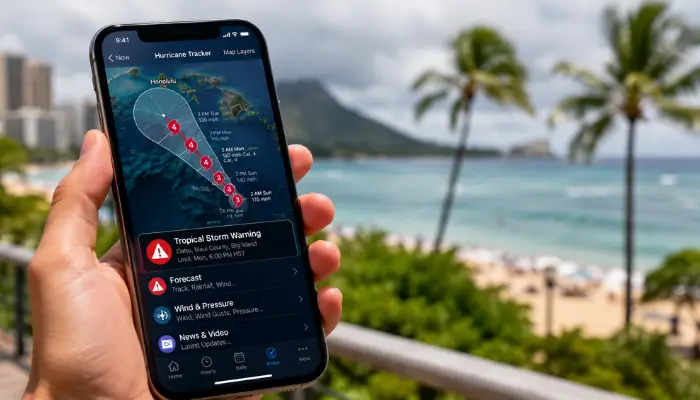
- Central Pacific Hurricane Center (CPHC), part of the National Weather Service, is the official source for storm tracks, watches, and warnings specific to Hawaii.
- National Weather Service Honolulu Forecast Office provides localized forecasts and briefings for each island.
- Hawaii Emergency Management Agency (HIEMA) issues statewide preparedness guidance and public alerts.
- Local Hawaii news outlets, which maintain dedicated hurricane tracking pages during active season, are useful for plain language updates once a storm is being monitored.
Bookmark the CPHC site if you have an upcoming trip during August or September. It updates multiple times daily during active storm tracking and is the single most reliable source for real information, rather than speculation.
conclusion:
The hawaiian islands hurricane season runs June 1 through November 30, with August and September carrying the highest activity. Direct hurricane landfalls remain historically uncommon, but close passes bringing heavy rain and rough surf happen more often and deserve genuine respect. For 2026 specifically, NOAA is forecasting an above normal season driven by El Niño, with 5 to 13 tropical cyclones possible across the Central Pacific.
None of that should stop you from booking a trip. It should just shape how you book one. Buy travel insurance, keep your plans reasonably flexible if you are traveling in August or September, and check the Central Pacific Hurricane Center in the days before you fly. That is genuinely the whole strategy, and it is exactly what millions of travelers do every single year to enjoy Hawaii safely, hurricane season and all.
Hawaiian Islands Hurricane Season FAQs
June 1 through November 30 every year, matching the entire Central Pacific basin’s official season.
The full window spans June through November, but August and September are the peak risk months, with July close behind and June, October, and November considerably quieter.
Yes. Hawaii sits inside the Central Pacific hurricane basin and experiences an official season identical in dates to the rest of the region.
Yes, running June 1 to November 30, tracked and named by the Central Pacific Hurricane Center.
Direct landfalls are historically rare, roughly a handful of significant events per decade across the entire chain, though close passes bringing heavy rain and rough surf happen more frequently than true landfalls.
Yes, for the vast majority of the season. Storms are tracked with days of advance notice, and no storm currently threatens the islands on most days of any given season.
Yes, with reasonable precautions like travel insurance and some booking flexibility, especially if traveling in August or September specifically.
Technically yes, October is inside the official window, but activity historically tapers significantly compared to August and September.
Yes, all four main islands sit within the same basin and carry broadly similar seasonal risk, though each has a slightly different historical track record as detailed above.
The same statewide window, June 1 through November 30, applies to Maui as it does to every island in the chain.