Oahu Population 2026: How Many People Actually Live There?

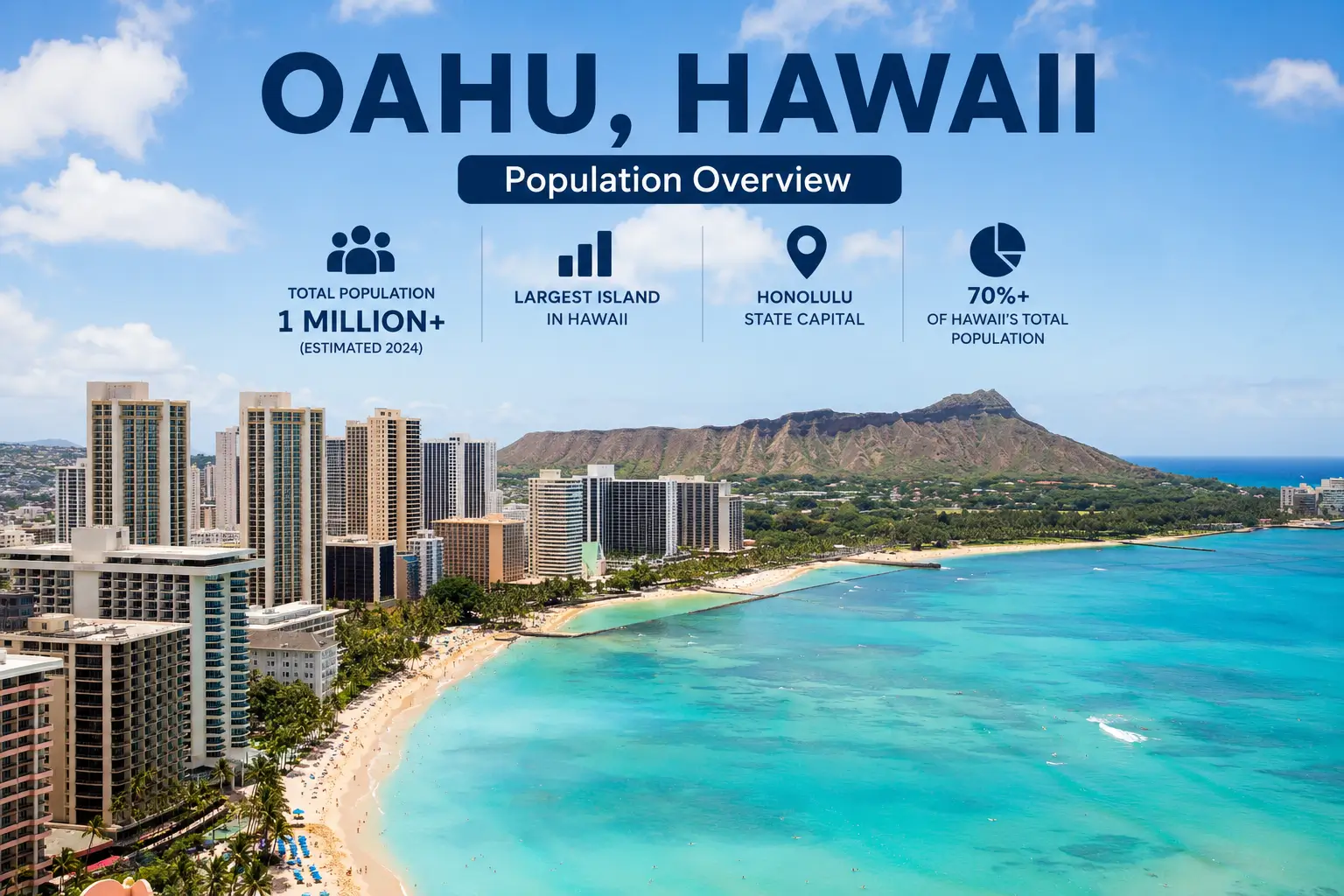
Oahu is the most populated island in Hawaii and home to nearly two-thirds of the state’s residents. As the location of Honolulu, Hawaii’s capital city, Oahu serves as the state’s economic, cultural, and transportation center. Oahu has an estimated population of approximately 1 million residents in 2026, making it the most populated Hawaiian island and home to nearly 70% of Hawaii’s total population.
This guide explains the population of Oahu in simple terms, including where people live, how the population has changed over time, population density, cultural diversity, tourism impacts, and what daily life is like on Hawaii’s busiest island. Understanding these trends also helps explain Hawaii Geography and why Oahu became the state’s economic and population center.
What is the current population of Oahu?
Oahu’s current population in 2026 is estimated at 987,000 to 999,000 people. According to recent Wikipedia estimates, the 2024 figure was 998,747, down from 1,016,494 in 2020. This small drop is mainly linked to residents moving to the mainland for a lower cost of living.
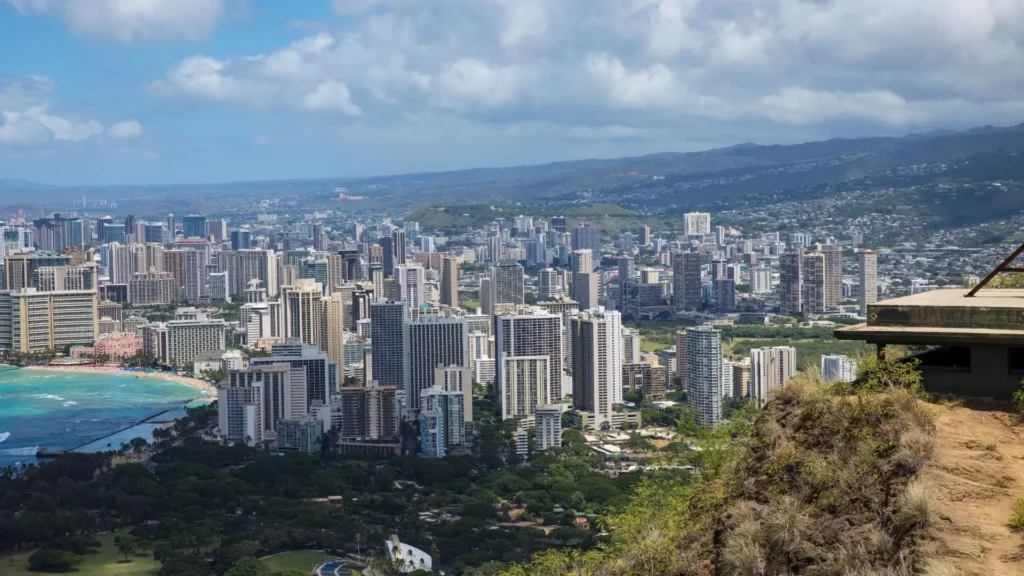
Even with this slight decline, Oahu is still Hawaii’s most populated island by far. No other island comes close in total population, jobs, or infrastructure. This is why Oahu continues to be the state’s main center for business, healthcare, and daily life.
Oahu Population 2026
The Oahu population in 2026 is estimated to be around 987,000 to 999,000 residents, making it by far the most populated Hawaiian island and home to roughly 70% of Hawaii’s total population. Most residents live in and around the Honolulu metropolitan area, which serves as the state’s economic and cultural center.
Comparison with 2020
According to the 2020 Census, Oahu had a population of approximately 1.02 million people. Recent estimates show the island’s population has declined slightly since then, largely due to domestic out-migration and Hawaii’s high cost of living.
Growth Trend
The population of Oahu in 2026 reflects a slow downward trend rather than rapid growth. While the island continues to attract tourists and new residents, population gains from births and migration have been offset by residents relocating to the U.S. mainland. Despite this modest decline, Oahu remains the population, business, and tourism hub of Hawaii.
What is the Capital of Hawaii?
Honolulu is the capital of Hawaii, and it sits right on the island of Oahu. It is part of the City and County of Honolulu, and it holds the state government, the largest airport, and the main business district. This is one of the biggest reasons Oahu has such a high population compared to other islands.
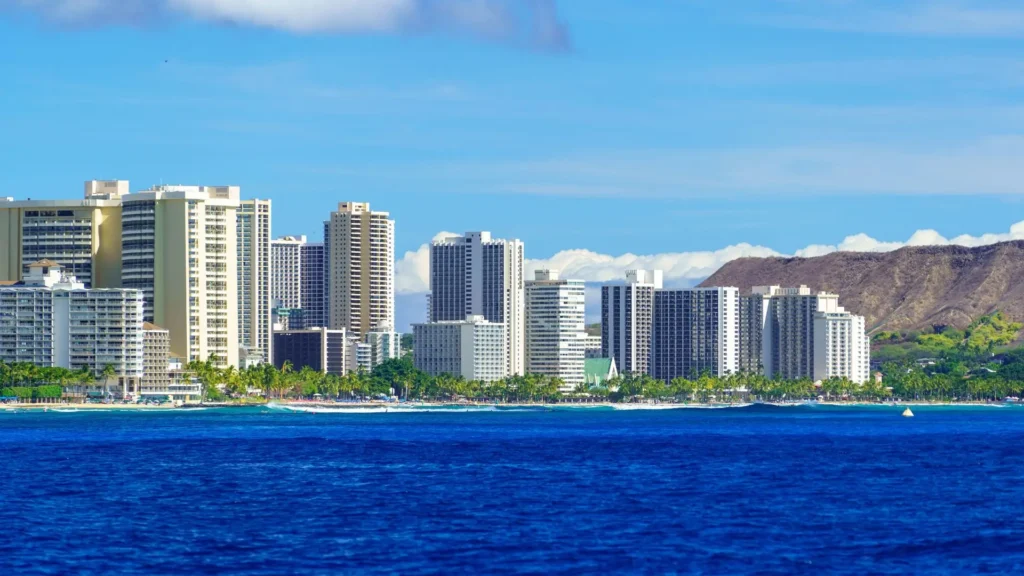
Honolulu is also broken down into well-known zip codes that visitors and residents search often, like 96813 for Downtown and 96815 for Waikiki. Knowing these areas helps make sense of why certain parts of Oahu feel busier and more developed than others.
Why Does Most of Hawaii’s Population Live on Oahu?
Oahu is Hawaii’s economic and transportation center. The island contains Honolulu, the state’s capital, the largest airport, major universities, military facilities, and many of Hawaii’s largest employers.
Because of these opportunities, more people live on Oahu than any other Hawaiian island. The concentration of jobs, schools, healthcare facilities, and services continues to attract residents from across the state.
How Much of Oahu’s Population is Military?
Oahu is home to several major U.S. military installations, including Pearl Harbor, Joint Base Pearl Harbor-Hickam, and Schofield Barracks. Active-duty personnel, reservists, and their families make up a meaningful share of the island’s total residents, especially in areas like Aiea, Pearl City, and Wahiawa.
This military presence is one of the reasons Oahu’s population stays fairly stable even during years of civilian out-migration. Military housing, base jobs, and long-term postings keep a steady flow of residents on the island, separate from tourism or the regular job market.
What Is the Population of Oahu?
The population of Oahu is estimated to be around 980,000 to 1 million residents, making it the most populated island in Hawaii. The majority of people live in Honolulu, which serves as the main urban and economic center of the island.
If you’re wondering what is the population in Oahu, it represents nearly 70% of Hawaii’s total population, highlighting how important the island is for business, tourism, and daily life. Despite slight fluctuations in recent years, Oahu continues to be the most densely populated and developed island in the state.
What are the 7 Hawaiian Islands?
Hawaii is made up of 7 main inhabited islands: Oahu, Maui, the Big Island (Hawaii Island), Kauai, Molokai, Lanai, and Niihau. Of these, Oahu is the most populated, while Niihau is the least populated and privately owned.
Each island has its own character, from Oahu’s busy cities to Niihau’s total privacy. If you want a closer look at how these islands compare in size, culture, and lifestyle, this guide to the Hawaiian Islands breaks each one down.
Population of Oahu vs Other Hawaiian Islands
| Island | Population |
|---|---|
| Oahu | Highest |
| Hawaii Island | Lower |
| Maui | Lower |
| Kauai | Lower |
| Molokai | Much Lower |
Oahu has by far the largest population in Hawaii, with nearly one million residents living on the island. In comparison, islands such as Maui, Kauai, and the Big Island have significantly smaller populations spread across larger areas.
This population difference explains why Oahu feels more urban and developed than other islands. Travelers who visit multiple Hawaiian islands often notice that Oahu offers more restaurants, attractions, shopping districts, and transportation options.
Oahu Population vs Maui Population
When comparing Hawaiian islands, Oahu has by far the largest population, while islands like Maui, Kauai, and the Big Island have significantly fewer residents. Here’s a simple comparison:
| Island | Population |
|---|---|
| Oahu | ~1 Million |
| Maui | Much Lower (~165,000) |
| Kauai | Lower (~75,000) |
| Big Island (Hawaii Island) | Lower (~200,000) |
This comparison shows that Oahu is the population and economic hub of Hawaii, while the other islands are less crowded and more rural. Travelers looking for city life and infrastructure prefer Oahu, while those seeking quieter experiences often choose Maui, Kauai, or the Big Island. If you’re still deciding between the two, this Oahu vs Maui comparison covers everything from beaches to daily costs.
Is Maui or Oahu more populated?
Oahu is far more populated than Maui. Oahu’s population is close to 1 million, while Maui’s is only around 165,000. That means Oahu has roughly 6 times more residents than Maui.
This gap in population is also why Oahu feels like a city and Maui feels like a quiet getaway. More people on Oahu means more traffic, more restaurants, and more things to do, while Maui offers a slower pace with fewer crowds.
Population Density of Oahu
The population density of Oahu is one of the highest in the United States, with an estimated 1,700 to 1,800 people per square mile. This high density is due to the island’s relatively small land area combined with a large population of nearly 1 million residents. Compared to other Hawaiian islands, Oahu is significantly more crowded, especially in developed regions.
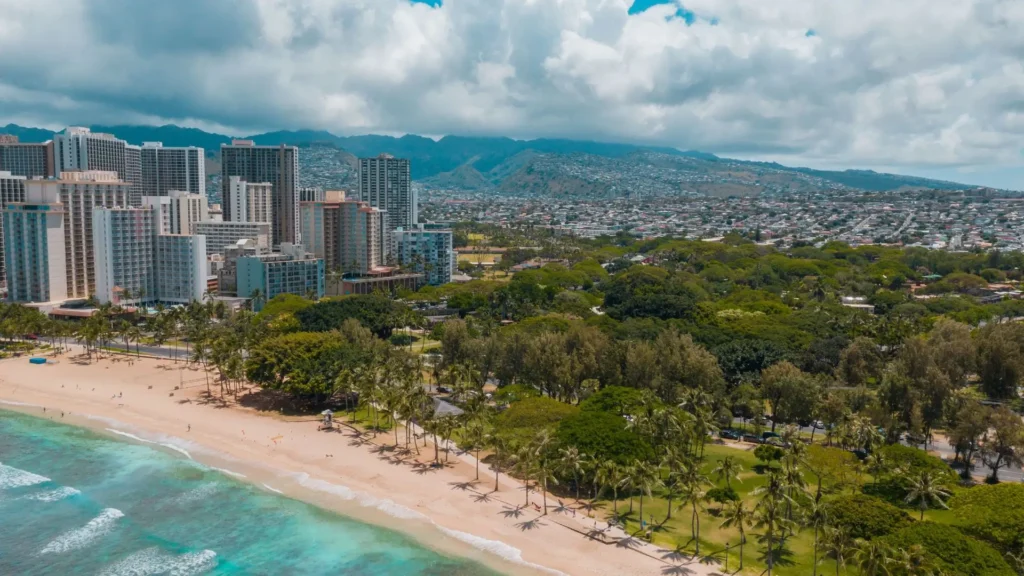
Most of this population is concentrated in Urban Honolulu, which includes areas like Waikiki, Downtown, and surrounding neighborhoods. This region has a much higher density than the rest of the island, with dense housing, high-rise buildings, and major infrastructure. Outside Honolulu, Oahu becomes less crowded, with more suburban and rural communities, but overall, it remains the most densely populated island in Hawaii.
How Population Affects Visitors to Oahu
Oahu’s large population creates advantages and disadvantages for travelers. Visitors benefit from more restaurants, attractions, shopping centers, and transportation options than other Hawaiian islands.
However, popular areas such as Waikiki, Honolulu, and the North Shore can become crowded during peak travel periods. Travelers seeking fewer crowds often visit beaches early in the morning or explore less-visited areas outside Honolulu. Planning around the island’s busiest months also helps, and this guide on the best time to visit Oahu breaks down when the crowds are lightest.
Most Crowded Areas in Oahu
Honolulu and Waikiki are usually the most crowded parts of Oahu because they contain major hotels, shopping centers, offices, and tourist attractions. These areas experience the highest daily traffic and visitor activity on the island.
Popular destinations such as Ala Moana Center, Waikiki Beach Hawaii, and Downtown Honolulu also attract large numbers of people throughout the year. Travelers looking for fewer crowds often explore areas such as Kailua, the North Shore, or the Windward Coast.
Will Oahu’s Population Continue to Grow?
Population growth on Oahu is expected to remain relatively stable because available land is limited and development regulations are strict. Unlike many mainland cities, Oahu cannot expand endlessly due to its island geography.
Even with slower growth, Oahu will likely remain Hawaii’s most populated island for many years. Strong employment opportunities, tourism, education, and government services continue to attract both residents and new arrivals to the island.
Where Do Most People Live on Oahu?
Most of Oahu’s population is concentrated in a few major communities, with Honolulu serving as the island’s largest urban center. These areas contain most of the island’s housing, businesses, schools, and employment opportunities.
Honolulu
Honolulu is the most populated area on Oahu and serves as Hawaii’s economic, cultural, and government center. It includes downtown Honolulu, Waikiki, and many surrounding residential neighborhoods. Visitors staying in the city often research safe neighborhoods in Honolulu before choosing accommodations.
Pearl City
Pearl City is a large residential community known for its family-friendly neighborhoods, schools, and convenient location near Honolulu.
Waipahu
Waipahu is one of Oahu’s most diverse communities and has a strong residential and working population. The area plays an important role in the island’s economy and local culture.
Kailua
Kailua is popular for its beach lifestyle, outdoor activities, and relaxed residential atmosphere. It is one of the most desirable places to live on Oahu.
Kapolei
Kapolei is often called Oahu’s “Second City” because of its rapid growth and expanding business, housing, and commercial developments.
Together, these communities help shape Oahu’s population distribution and create a balance between urban living and smaller residential areas.
Who owns 90% of a Hawaiian island?
This is a common question people search alongside Oahu topics. In reality, 98% of the island of Lanai is owned by billionaire Larry Ellison, the founder of Oracle, who bought it from Castle & Cooke in 2012 for around $300 million. His purchase included resorts, farmland, and most of the island’s homes and businesses.
Niihau follows a similar pattern. It has been privately owned by the Robinson family for over 150 years, and they still control more than 55,000 acres today. Oahu works completely differently from both of these islands, since it is publicly accessible with ownership spread across many residents, businesses, and government agencies.
Is Oahu’s Population Growing?
Oahu’s population has grown steadily over the years, but growth has remained relatively slow compared to many large mainland cities. Limited land availability, high housing costs, environmental protections, and balanced migration patterns have helped keep population growth under control.
Despite these limitations, Oahu continues to attract residents because of its strong economy, employment opportunities, and desirable lifestyle. This balance between development and preservation is one reason the island remains attractive to both residents and visitors.
Cultural Diversity in Oahu
Oahu is one of the most culturally diverse islands in Hawaii, with communities from many different backgrounds contributing to daily life and local traditions. The Filipino community is one of the largest ethnic groups on the island and has played an important role in Oahu’s development for generations.
Today, Filipino residents contribute to healthcare, tourism, construction, education, and local businesses throughout Oahu. Visitors can experience this influence through community events, cultural festivals, local restaurants, and family-owned businesses. This cultural diversity is one reason Oahu feels more international and multicultural than many other Hawaiian islands.
Oahu’s Ethnic Population Breakdown 2026
Oahu’s population is made up of a wide mix of ethnic groups, which is part of what makes the island feel so different from mainland cities. Asian residents make up the largest share of the population, followed by Native Hawaiian and Pacific Islander communities, and a smaller but steady percentage of White residents.
This mix shapes everything from the food served in local restaurants to the festivals held throughout the year. It also means Oahu’s neighborhoods often blend traditions, languages, and customs in a way that feels natural rather than separated by community.
Social Challenges Facing Oahu
Like many major population centers, Oahu faces several social and economic challenges alongside its growth. One of the most visible issues is housing affordability, which affects many residents across the island. Rising living costs, limited housing availability, and economic pressures have contributed to homelessness in some communities.
Most support services, shelters, and outreach programs are concentrated in Honolulu, where the population is highest. Local organizations and government agencies continue working on affordable housing projects, community support programs, and long-term solutions designed to improve quality of life for residents.
How Oahu’s Beaches Influence Tourism
Oahu’s beaches are one of the main reasons millions of visitors choose the island every year. Famous locations such as Waikiki Beach, Lanikai Beach, Sunset Beach, Hanauma Bay, and Kailua Beach attract travelers from around the world and play a major role in the island’s tourism industry. When we visited Waikiki Beach ourselves, it was already crowded by 7 AM, which says a lot about how dense Oahu’s population really is.
Each beach offers a different experience. Waikiki Beach is known for surfing and nightlife, Lanikai Beach is famous for calm turquoise water, Sunset Beach attracts surfers during winter, Hanauma Bay is popular for snorkeling, and Kailua Beach is a favorite for kayaking and family activities. These world-class beaches help make Oahu Hawaii’s most visited and populated island. For a full list of where to go, this guide to the best beaches on Oahu covers all the top spots by area.
Why Oahu Attracts So Many Visitors
Oahu is Hawaii’s most visited island because it offers a unique mix of history, culture, beaches, and outdoor attractions. Popular destinations such as Pearl Harbor, Diamond Head, the North Shore, Downtown Honolulu, and the Polynesian Cultural Center attract millions of visitors each year.
Each location highlights a different side of the island. Pearl Harbor showcases American history, Diamond Head offers panoramic views, the North Shore is famous for surfing, and Honolulu serves as the island’s cultural and business center. This variety of attractions is one reason Oahu continues to attract both tourists and new residents.
Best Things to Do in Oahu
If you’re visiting Oahu, some of the top experiences include a Pearl Harbor tour, the Diamond Head hike, surfing lessons at Waikiki Beach, watching the big waves roll in at the North Shore, and snorkeling at Hanauma Bay. Despite the island’s high population density, these spots still draw thousands of visitors every single day.
Because Oahu is so densely populated, planning ahead makes a real difference, especially for popular spots that fill up early. This full list of things to do in Oahu breaks down activities by area, so you can avoid the busiest crowds.
How Tourism Impacts Oahu’s Population
Tourism plays a major role in Oahu’s economy and has a significant impact on the island’s population patterns. While Oahu has around one million permanent residents, millions of visitors arrive each year, increasing demand for hotels, transportation, restaurants, and local services.
Most visitors stay in Waikiki, which is one of the busiest areas on the island. This concentration of tourism helps support local businesses and jobs, but it also contributes to higher housing costs, traffic congestion, and crowded attractions during peak travel seasons.
Popular Restaurants in Oahu
Thanks to heavy tourism, Waikiki and Honolulu are packed with dining options, from local plate lunch spots to high-end restaurants. Kailua and the North Shore are also popular for food, where visitors often try local food trucks and fresh seafood.
The island’s population density plays a big part in this too, since more residents and visitors in one place naturally means more food options to choose from. For specific recommendations, this list of Waikiki restaurants covers some of the most popular spots near the beach.
What Is It Like to Live in Oahu?
Living in Oahu offers a unique balance between island beauty and modern city life. Residents enjoy easy access to beaches, outdoor activities, diverse communities, and many of Hawaii’s largest services and job opportunities.
At the same time, Oahu’s large population creates challenges such as higher housing costs, traffic congestion, and limited space in some urban areas. This combination of convenience and island living is one reason why Oahu remains Hawaii’s most populated island.
Conclusion
The population in Oahu Hawaii reflects a balanced mix of culture, economy, and natural beauty. With around one million residents, Oahu stands as the most populated and most active island in the Hawaiian chain.
From popular beaches in Oahu Hawaii to historical landmarks, from diverse communities and cultural traditions to modern urban challenges, Oahu reflects both the opportunities and complexities of island life. The island shows both beauty and complexity.
If you understand Oahu only as a tourist destination, you miss its real identity. It is a living, growing island where tradition and modern life exist side by side.
For anyone studying Hawaii or planning to visit, Oahu is the best place to understand how island life truly works.
FAQs about Population in Oahu Hawaii
The population of Oahu is around one million people, making it the most populated island in Hawaii.
Oahu has Honolulu, the state capital, major businesses, tourism centers, universities, and the largest airport in Hawaii.
Nearly 70% of Hawaii’s total population lives on Oahu.
Honolulu is the largest and most populated city area on the island.
Popular areas like Waikiki can get crowded, especially during peak travel seasons, but many parts of Oahu still feel calm and relaxing.
The Filipino community is one of the largest ethnic groups on Oahu and plays a major role in local culture and business.
High housing costs and limited affordable homes are major reasons behind the homeless population in Oahu.
Waikiki Beach, Lanikai Beach, Sunset Beach, Hanauma Bay, and Kailua Beach are among the most famous beaches.
Pearl Harbor, Diamond Head, North Shore, Waikiki, and the Polynesian Cultural Center are top attractions.
Many people enjoy Oahu because of its beaches, warm climate, job opportunities, and cultural diversity, though living costs can be high.