
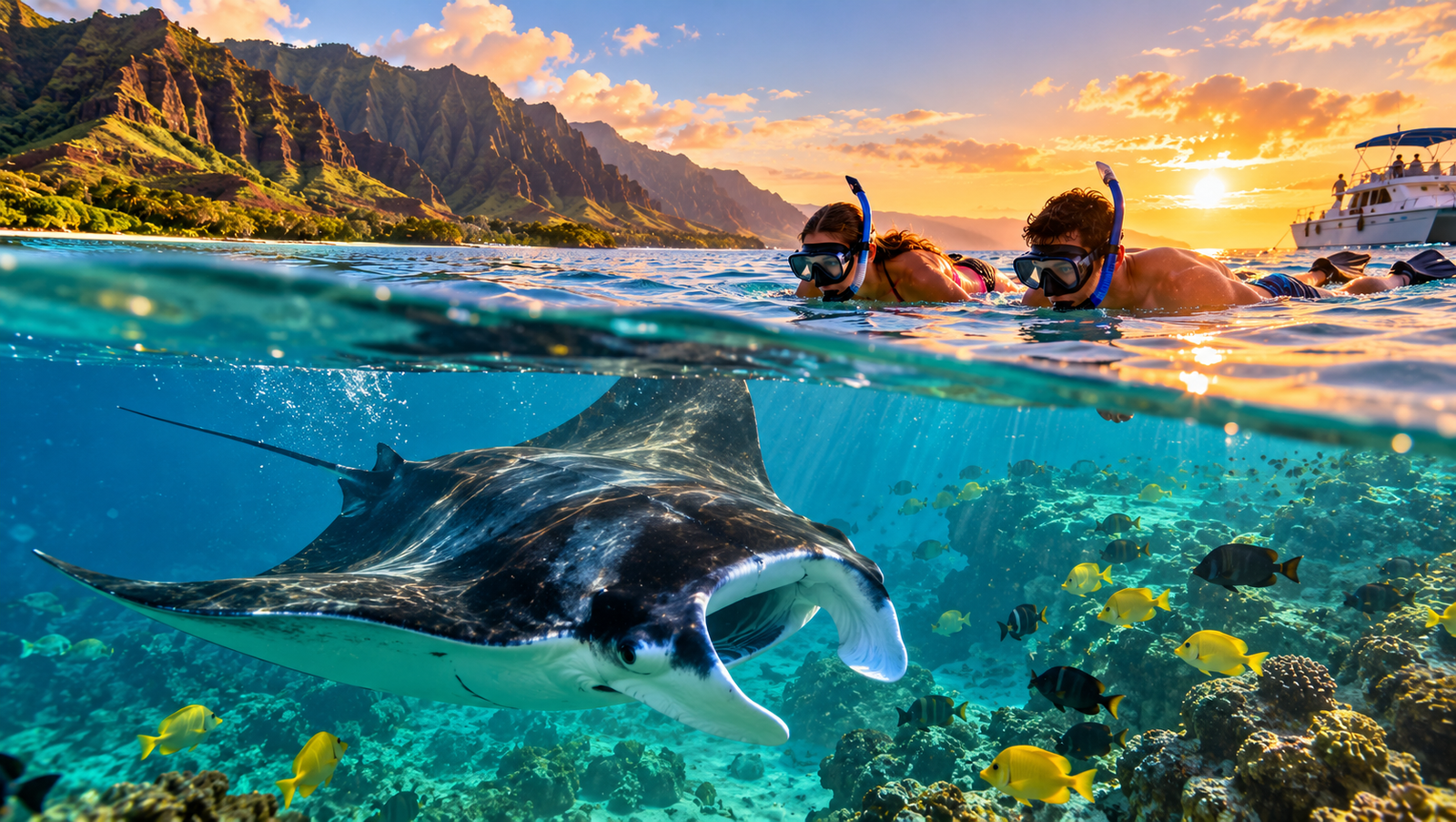
Manta Ray Snorkel Kauai: Tours, Marine Life & Best Alternatives (2026)
If you are searching for a manta ray snorkel in Kauai, it is important to know what the island offers before booking a tour. Kauai has spectacular snorkeling, colorful reef fish, sea turtles, and dramatic coastal scenery. However, Hawaii’s famous nighttime manta ray snorkeling experience is primarily associated with the Kona Coast on the Big Island.manta ray snorkel Kauai
That does not mean your Kauai ocean adventure will disappoint. You can explore reefs, cruise along the spectacular Nā Pali Coast, and look for marine life in the Pacific. If swimming with manta rays at night is your main goal, you may need to plan a separate excursion on Hawaiʻi Island.
This guide explains the difference, the best Kauai snorkeling alternatives, how to choose a tour, and what to know before entering the ocean.
Can You Snorkel With Manta Rays in Kauai?
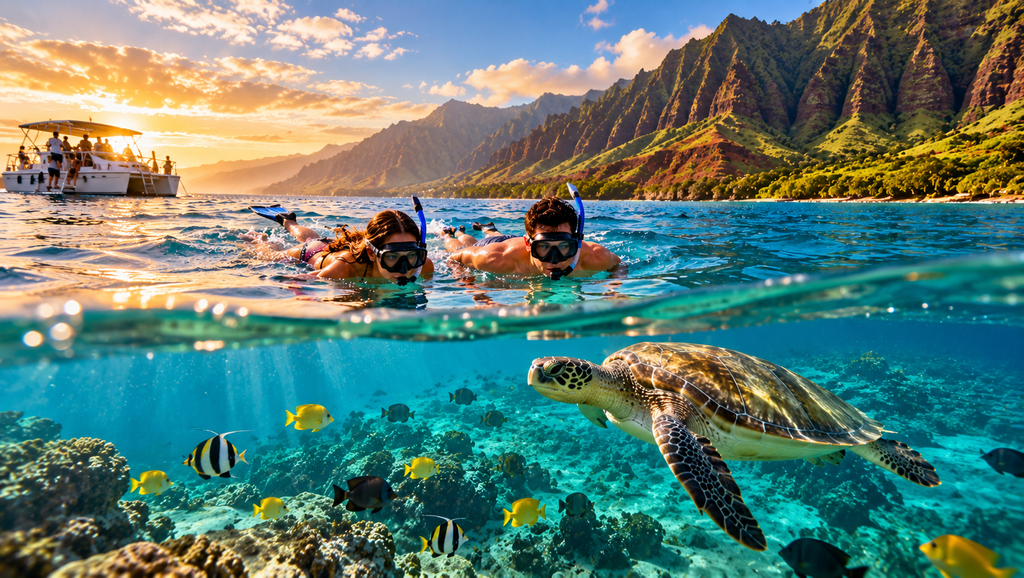
Kauai is not the established destination for Hawaii’s famous manta ray night-snorkeling tours. Those tours are concentrated along the Kona Coast of the Big Island, where operators visit known manta ray viewing sites after sunset.
Kauai’s snorkeling experiences focus more on coral reefs, tropical fish, Hawaiian green sea turtles, and scenic boat trips along the island’s coastline. Manta rays may be encountered in the wider ocean environment, but sightings are unpredictable and should never be promised as part of a standard Kauai snorkeling tour.
If a tour advertises manta rays, ask the operator exactly where the trip takes place and whether the experience departs from Kauai or another island.
For official background, the Hawaii tourism website identifies Kona as a leading location for nighttime manta ray snorkeling: https://www.gohawaii.com/islands/hawaii-big-island/things-to-do/water-activities.
Best Snorkeling Alternatives in Kauai
If you are staying on Kauai, you can still enjoy excellent ocean experiences without traveling to another island. Conditions vary by season, swell, wind, rainfall, and the individual site, so follow local guidance rather than assuming a beach is safe every day.
1. Nā Pali Coast Snorkeling Tours
The Nā Pali Coast is famous for its dramatic green cliffs, sea caves, remote coastline, and clear-water scenery when conditions cooperate. Guided boat tours may include snorkeling stops selected by the captain according to the day’s ocean conditions.
Depending on the trip and location, you may see tropical fish, sea turtles, dolphins, and other marine life. Wildlife sightings are not guaranteed, and snorkeling may be changed or canceled if conditions are unsuitable.
A boat tour is a good option for travelers who want to combine sightseeing with time in the water.
Explore tour information from Kauai Sea Tours or Nā Pali Coast snorkeling tours.
2. Poipu and Kauai’s South Shore
The South Shore is a popular area for visitors who want access to beaches, restaurants, and snorkeling opportunities. Poipu and nearby coastal areas can offer a convenient base for an ocean-focused vacation.
Conditions can change quickly, and not every beach is suitable for snorkeling on every day. Check local ocean-safety reports, obey posted signs, and choose a location appropriate for your swimming ability.
Do not enter the water simply because other visitors are swimming. Strong currents, waves, and poor visibility can create hazards even at familiar beaches.
3. Tunnels Beach and Kauai’s North Shore
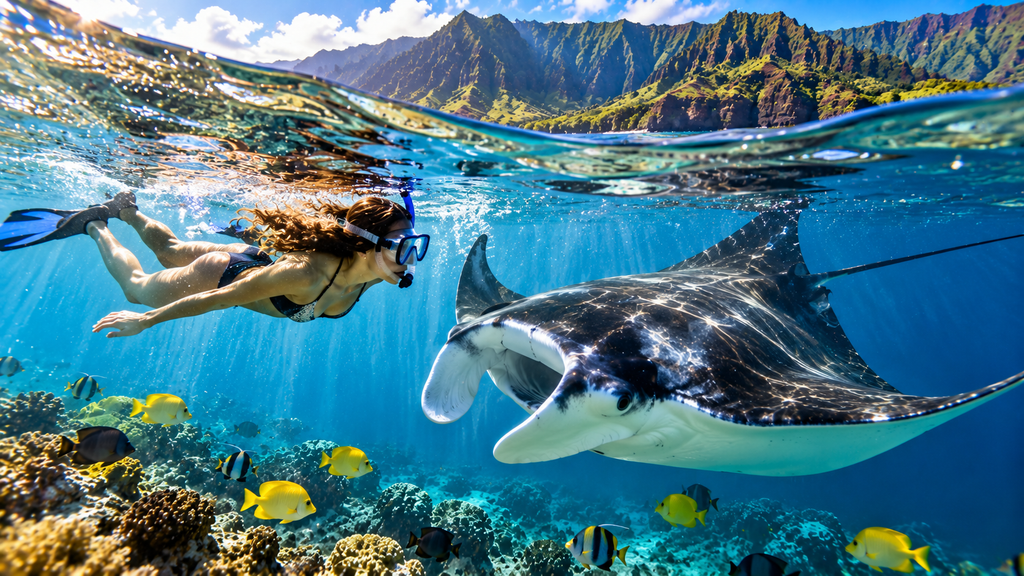
Tunnels Beach, also known as Makua Beach, is known for its reef scenery and underwater life. It is a popular name among experienced snorkelers, but conditions can be dangerous, particularly during periods of large surf.
The North Shore’s ocean conditions vary considerably by season. Before visiting, check current surf and safety information and do not snorkel when waves, currents, or visibility are unsuitable.
If you are a beginner, consider a guided experience or a more protected location recommended by local ocean-safety professionals.
4. Guided Shore Snorkeling
A guided shore-snorkeling experience may be more suitable than a boat trip if you prefer a shorter outing or want instruction before entering the water.
Ask the guide about the day’s conditions, the planned site, equipment, flotation devices, group size, and the swimming ability required. A responsible operator should be willing to change the plan if the conditions are unsafe.
Where Can You Actually Swim With Manta Rays at Night in Hawaii?
For the best-known manta ray night-snorkeling experience, look to the Kona Coast on Hawaiʻi Island, commonly called the Big Island.
At established viewing sites, tour operators use underwater lighting that attracts plankton. Manta rays may then swim through the illuminated water to feed. Snorkelers generally float at the surface while holding a purpose-built flotation device and observing the animals below.
The experience is different from ordinary reef snorkeling because it takes place after dark and usually requires a boat tour.
Kona manta ray tours
Tour departures operate from locations around Kailua-Kona and Keauhou, depending on the operator. Before booking, compare:
- Departure harbor and check-in location.
- Tour duration and time spent in the water.
- Minimum age and swimming requirements.
- Whether snorkel gear, wetsuit tops, and flotation equipment are included.
- Cancellation and rescheduling policies.
- What happens if manta rays are not seen.
- Safety procedures and the operator’s wildlife-interaction practices.
Manta ray sightings are never guaranteed. Choose a reputable operator and follow all crew instructions to avoid disturbing the animals.
Official visitor information is available from Go Hawaiʻi’s Keauhou Bay guide.
Should You Travel From Kauai to the Big Island for Manta Rays?
That depends on how important the manta ray experience is to your trip.
If manta ray snorkeling is a major priority, you may want to include the Big Island in your itinerary rather than trying to fit the experience into a Kauai-only stay. Interisland travel requires additional time, transportation planning, and potentially an overnight stay.
If you have only a few days on Kauai, spending the time on a scenic snorkeling cruise, a guided ocean excursion, or another island activity may make more sense.
Before purchasing flights or a tour, compare the total cost and schedule. An interisland flight alone does not guarantee that you will be able to join a nighttime tour on the same day.
What Is the Best Time to Snorkel in Kauai?
The best snorkeling conditions depend on the beach, the season, and the daily ocean forecast. Kauai’s North Shore and South Shore can experience different conditions at the same time.
Rather than choosing a snorkeling site based only on an online recommendation, check the local surf forecast and ocean-safety reports on the day of your activity.
Consider these planning principles:
- Book a flexible tour when possible.
- Ask the operator which coast is most suitable for the expected conditions.
- Avoid snorkeling during high surf, strong currents, or poor visibility.
- Follow lifeguard advice and posted warnings.
- Allow enough time for weather-related changes to your itinerary.
A calm-looking shoreline does not always indicate safe underwater conditions.
What to Bring on a Kauai Snorkeling Tour
Your operator will tell you what is included, but these items are often useful:
- Swimsuit and towel.
- Reef-conscious sun protection that complies with local guidance.
- Drinking water.
- A dry change of clothes.
- Secure storage for valuables.
- Prescription swimming or snorkeling equipment if required.
- Any medication or personal supplies you need.
Do not touch coral, chase marine animals, or stand on the reef. Maintain a respectful distance from turtles, rays, and other wildlife, and follow the crew’s instructions.
Is Snorkeling in Kauai Suitable for Beginners?
Some guided trips and shore locations may suit beginners, but suitability depends on swimming ability and ocean conditions. A tour described as beginner-friendly is not a guarantee that the ocean will be calm or safe.
Tell the operator honestly about your comfort in the water. Ask whether flotation devices and instruction are provided, and do not participate if the conditions exceed your ability.
If you are not a confident swimmer, choose a suitable supervised activity rather than attempting to snorkel alone.
Frequently Asked Questions
Are manta rays common in Kauai?
Manta rays can occur in Hawaiian waters, but Kauai is not the main destination for the established nighttime manta ray snorkeling experience. Do not book a standard Kauai snorkel tour expecting a guaranteed manta ray encounter.
Which Hawaiian island is best for manta ray night snorkeling?
The Kona Coast on Hawaiʻi Island, the Big Island, is the best-known destination for organized manta ray night-snorkeling tours.
Can a Kauai snorkeling tour include manta rays?
Some operators may mention manta rays among possible wildlife sightings, but encounters are unpredictable. Confirm the actual route and tour description directly with the operator.
Is Nā Pali Coast snorkeling worth it?
It can be an excellent experience for visitors who want dramatic coastal scenery and an opportunity to snorkel when conditions permit. Visibility and access vary, and the captain may change the itinerary for safety.
Do I need to be a strong swimmer?
Requirements vary by operator and activity. Some trips require comfortable swimming in open water even when flotation equipment is provided. Ask about the exact requirements before booking.
Can I see manta rays without snorkeling?
In Kona, some operators offer boat-based viewing experiences or other ways to observe the ocean, but availability and the likelihood of seeing manta rays vary. Confirm the experience directly with the operator.
Final Thoughts
Kauai offers memorable snorkeling opportunities, from scenic coastal cruises to guided reef outings. However, travelers whose main goal is to swim with manta rays at night should look at established tours on the Kona Coast of the Big Island.
Choose your activity according to the island you are visiting, the conditions on the day, and your comfort in the water. With realistic expectations and careful planning, you can enjoy Hawaii’s marine life while keeping safety and wildlife respect at the center of your trip.
Useful official resources:

One Comment